A 10-day safari adventure among endless deserts, red dunes, ancient canyons and an ocean crashing against the shores of one of the harshest lands on the planet.
There are places you don't simply visit – they make you fall silent.
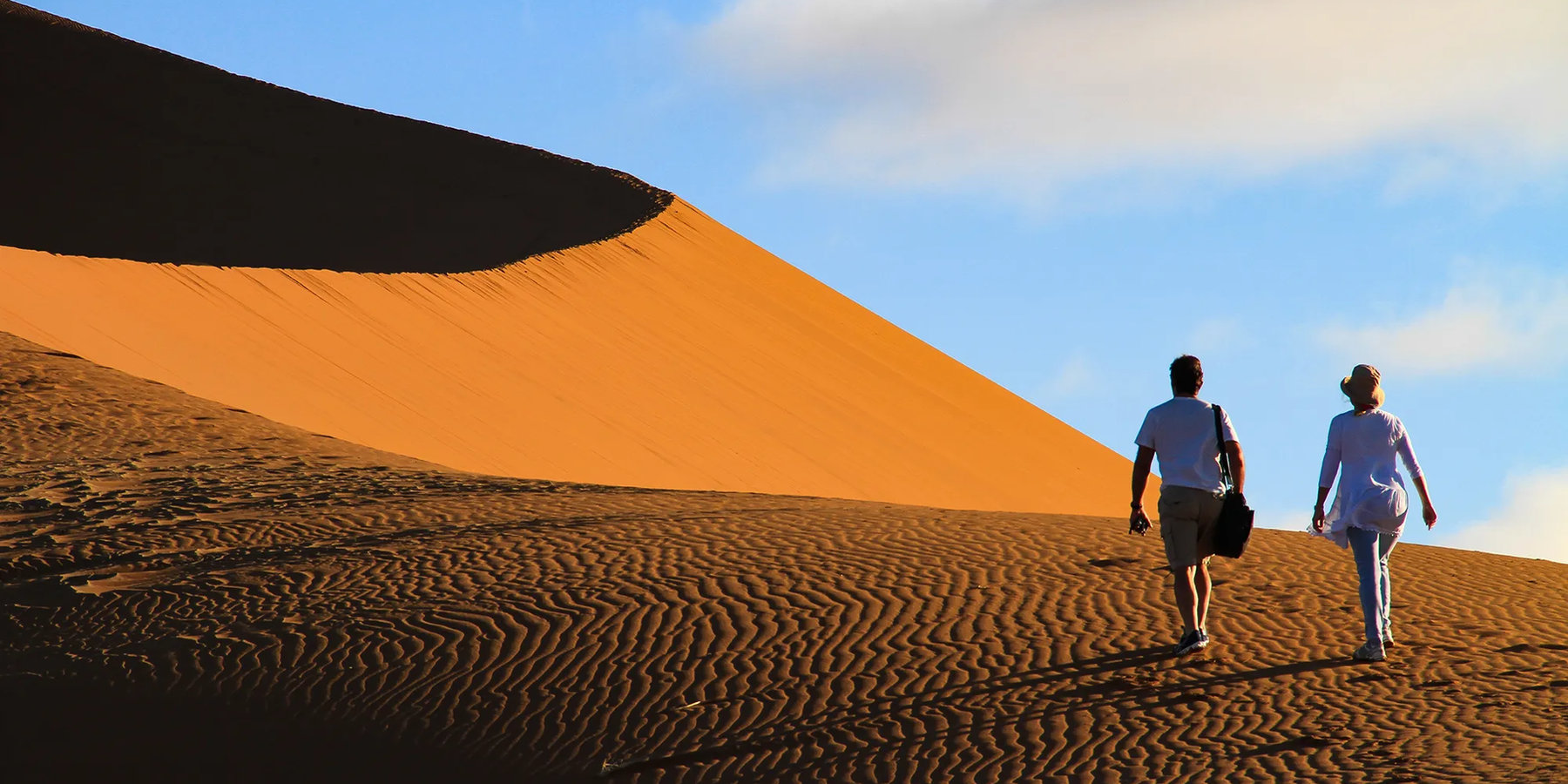
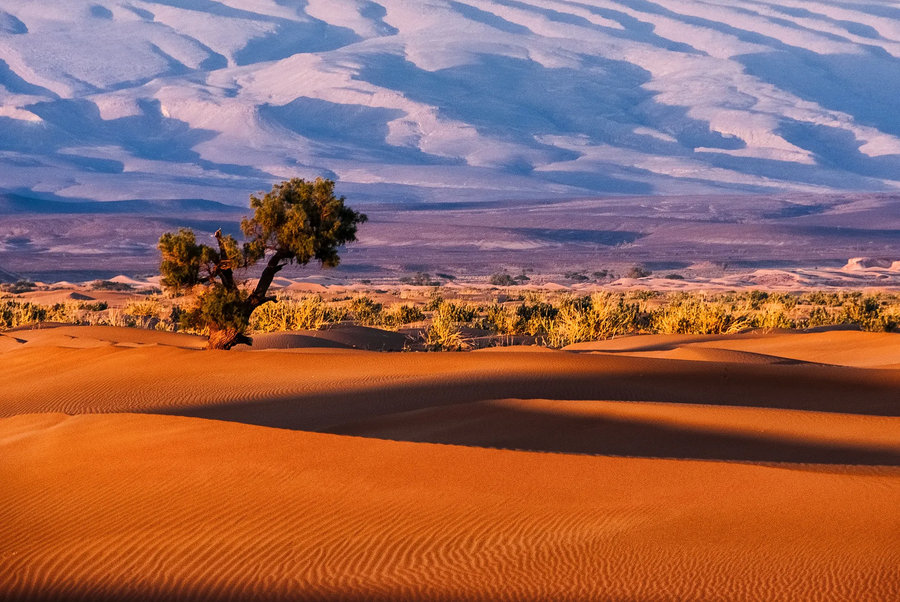
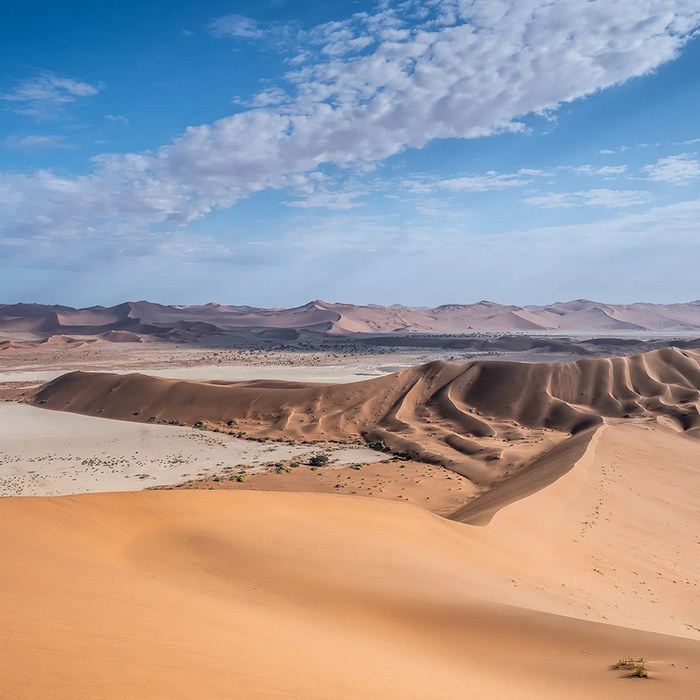
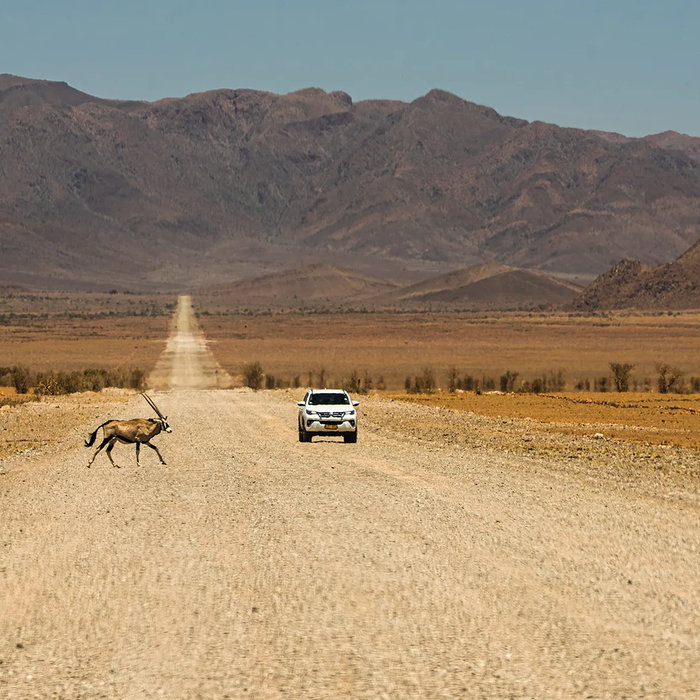
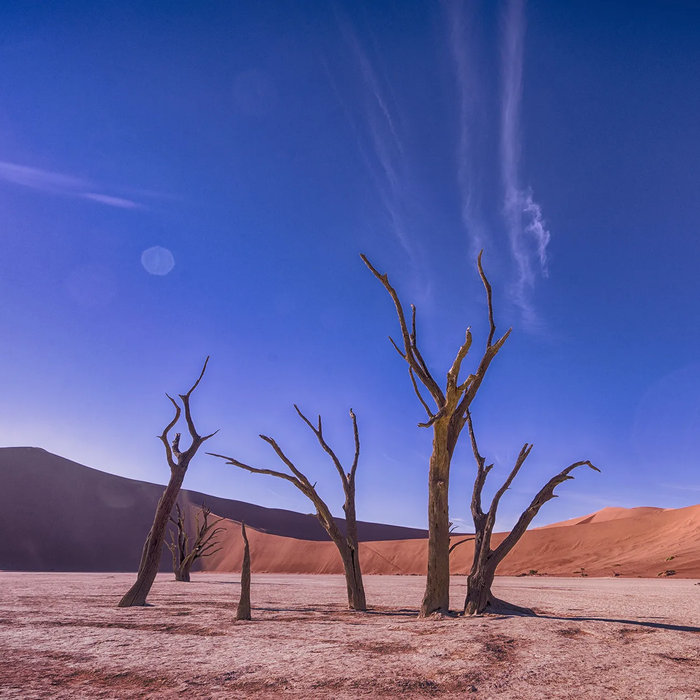
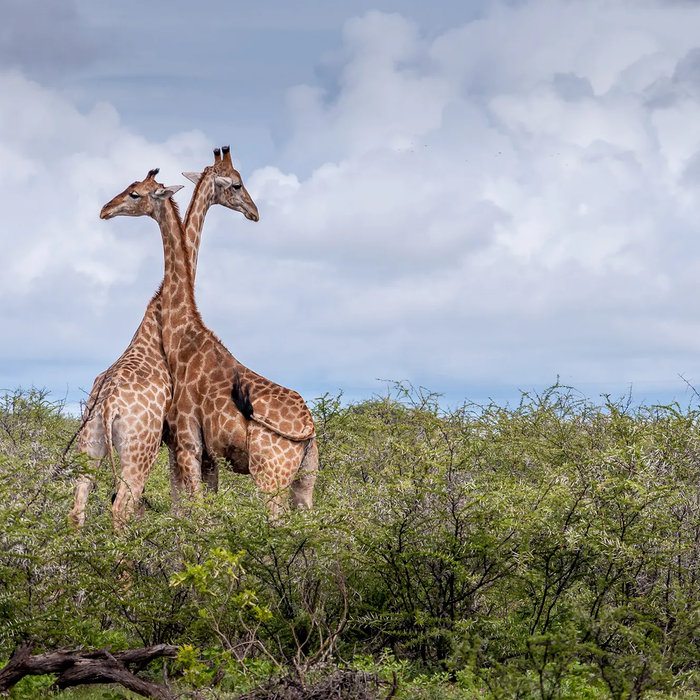
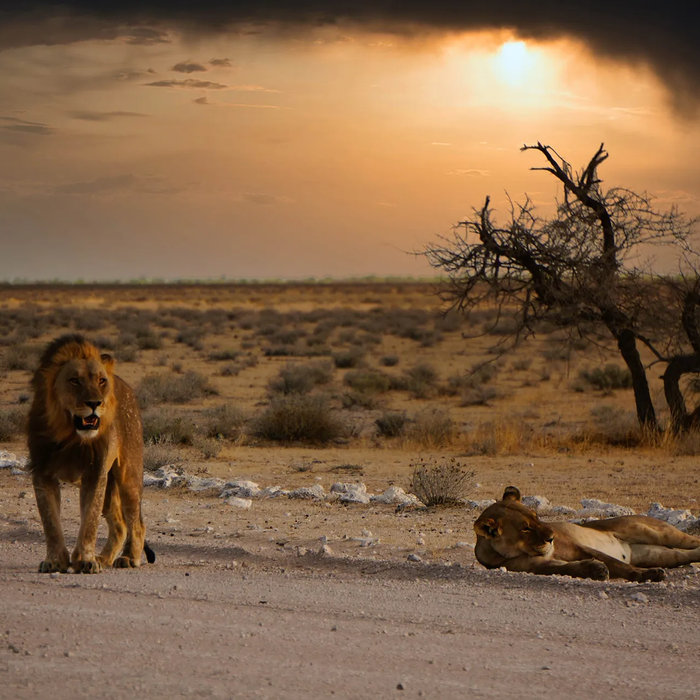
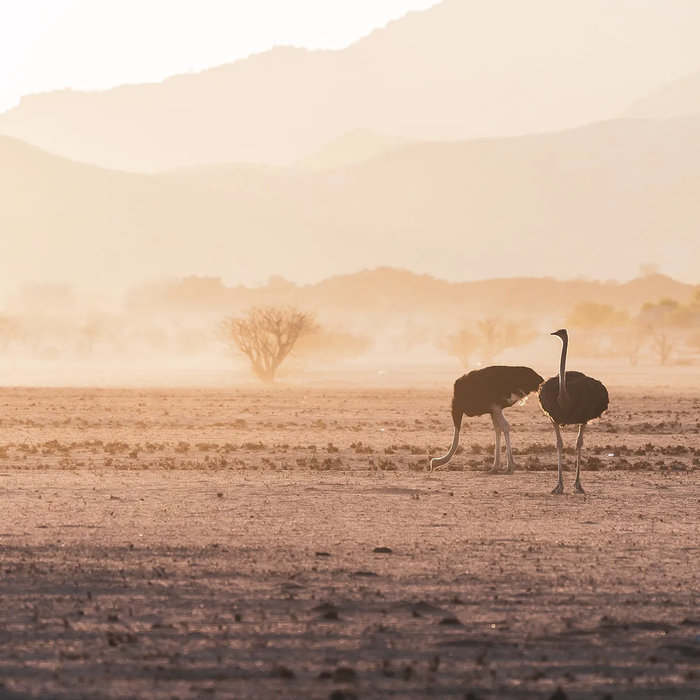
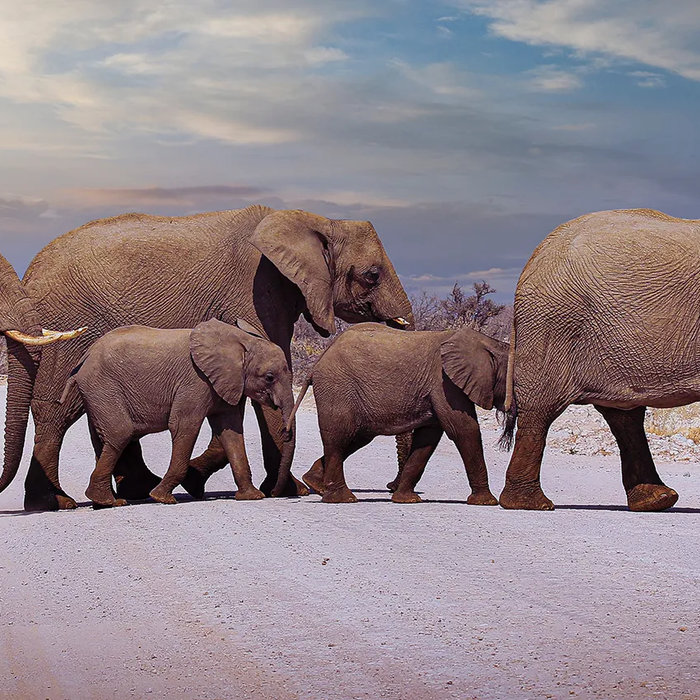
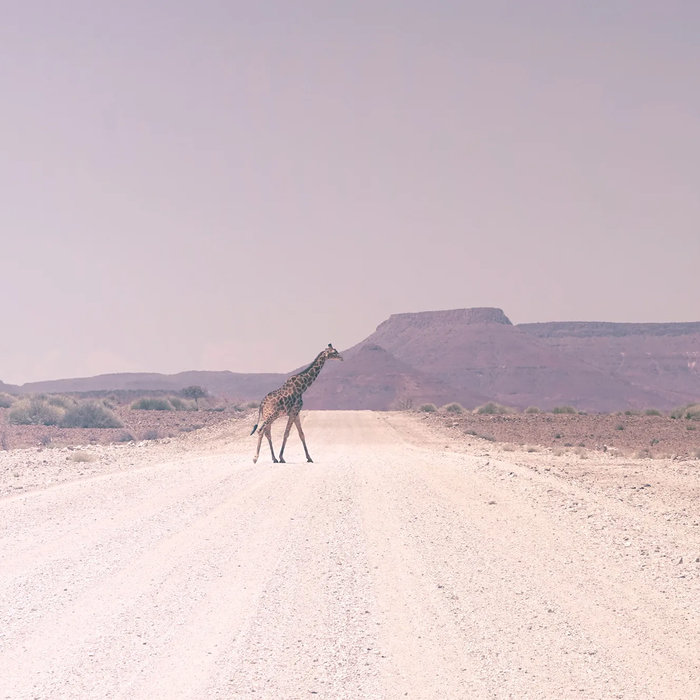
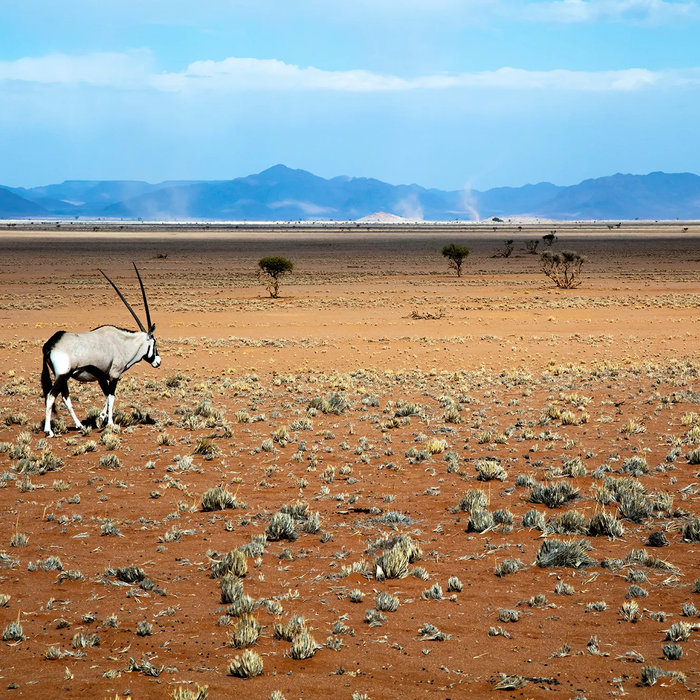
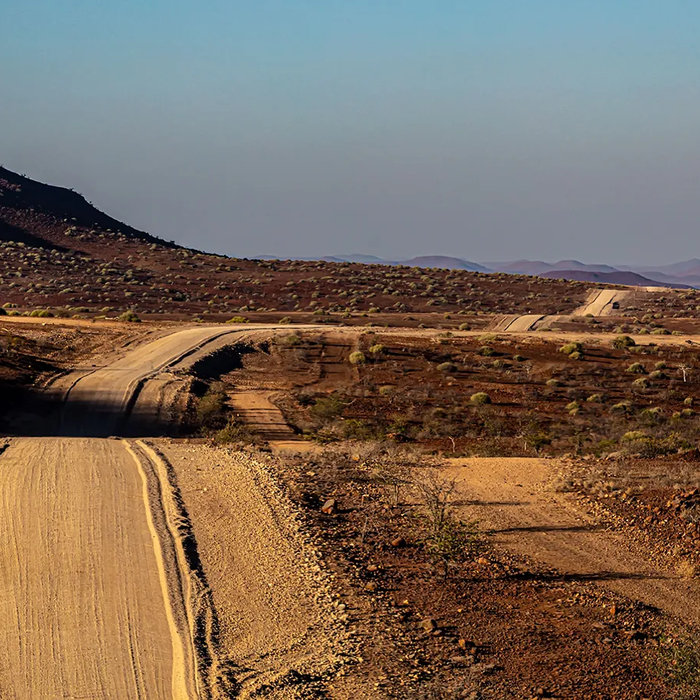
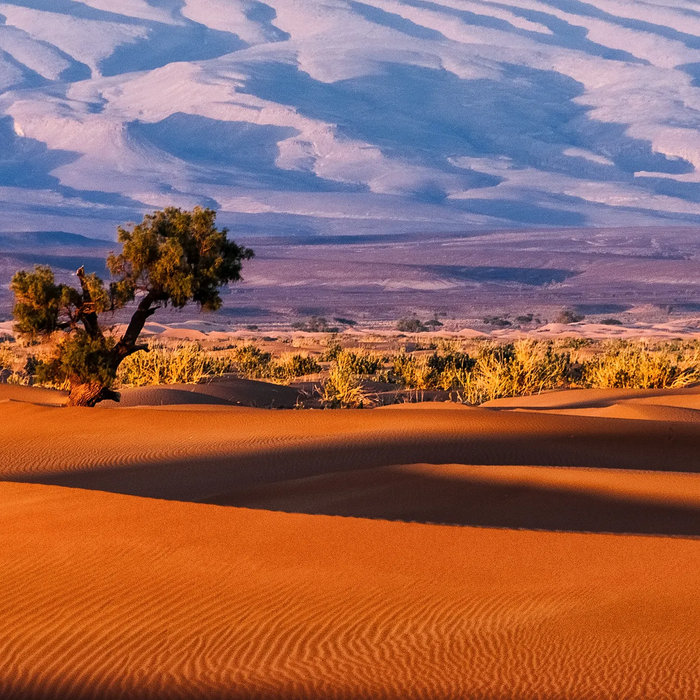
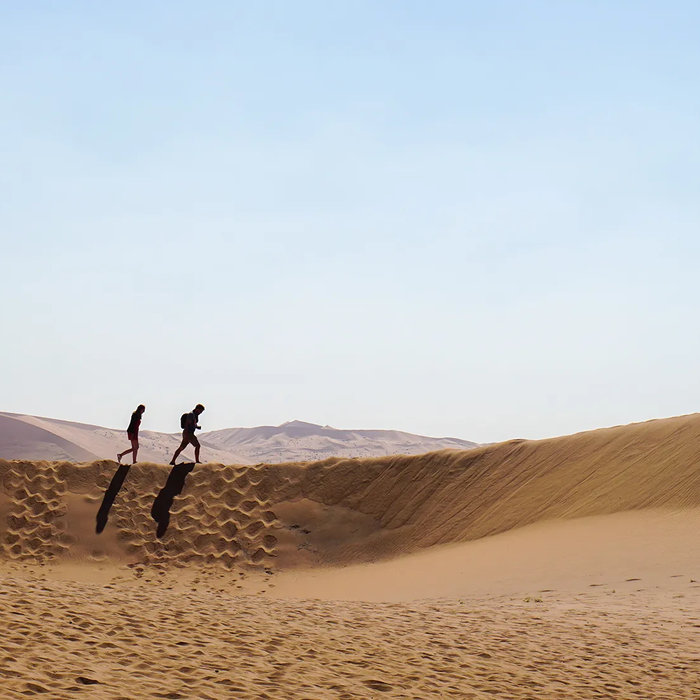
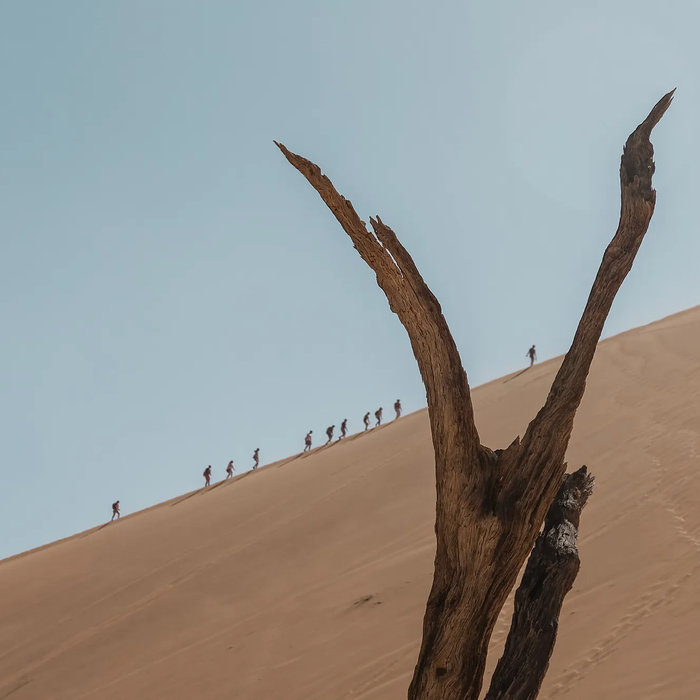
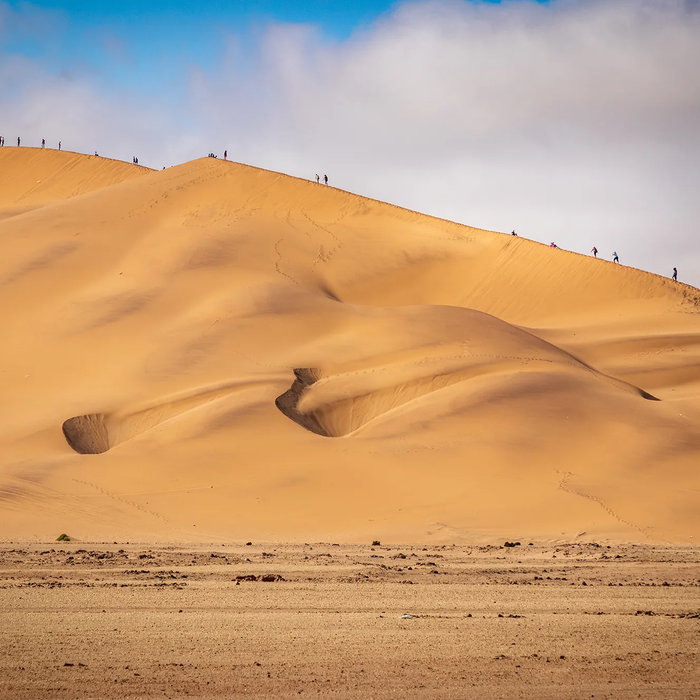
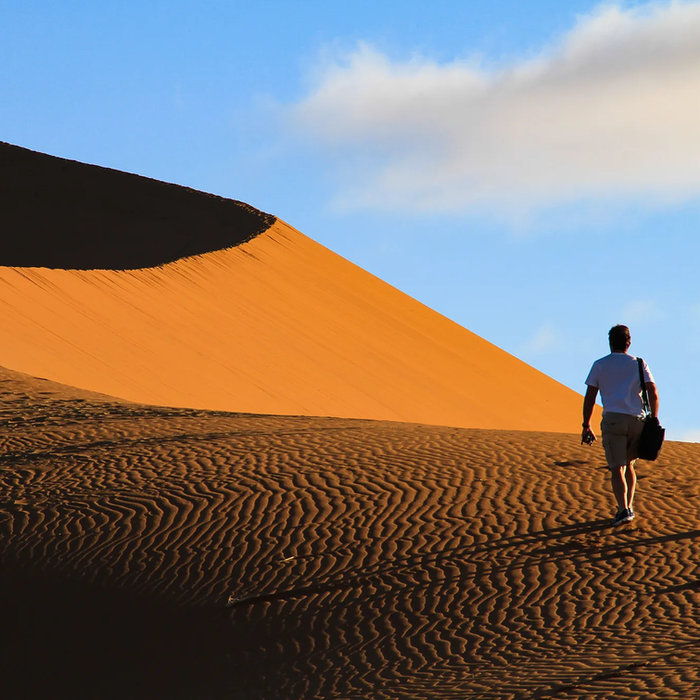
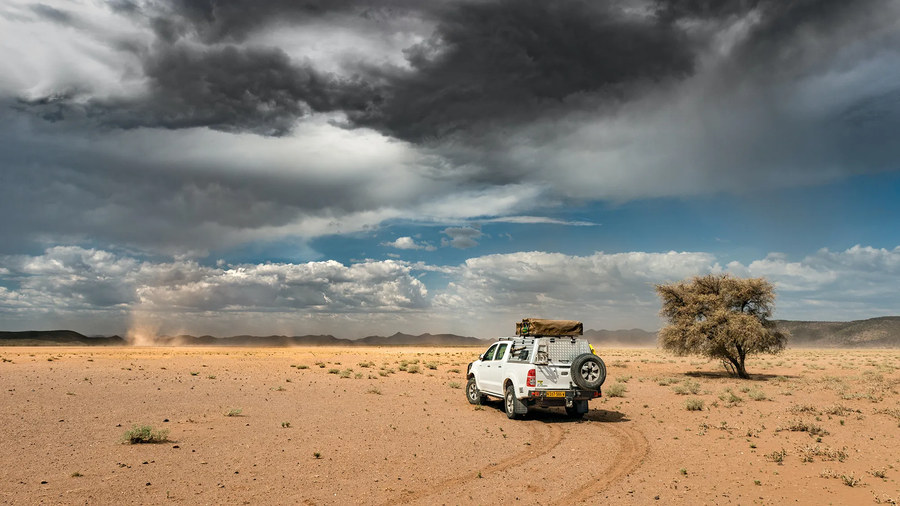
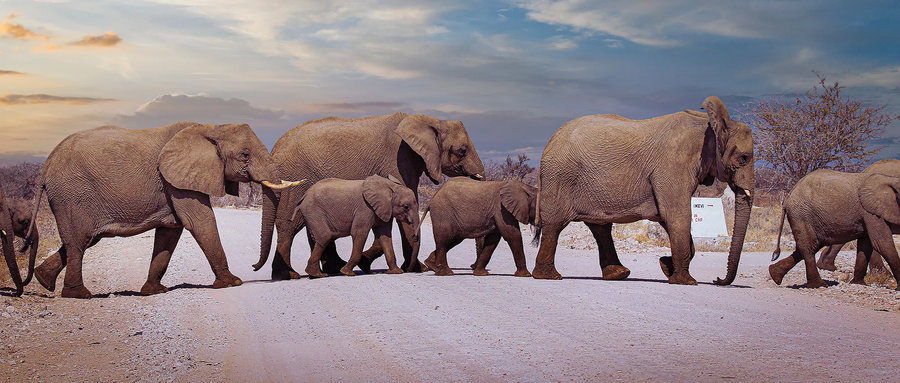
Endless deserts, red dunes, ancient canyons and an ocean crashing against the shores of one of the harshest lands on the planet. And amid this apparent wasteland, life is everywhere – elephants, lions, rhinos, giraffes and countless wild animals that have learned to survive where a human could hardly manage. We will climb the majestic dunes of Sossusvlei, cross the endless landscapes of the Namib, and head for Etosha – a place where wildlife is not an attraction but a way of life.
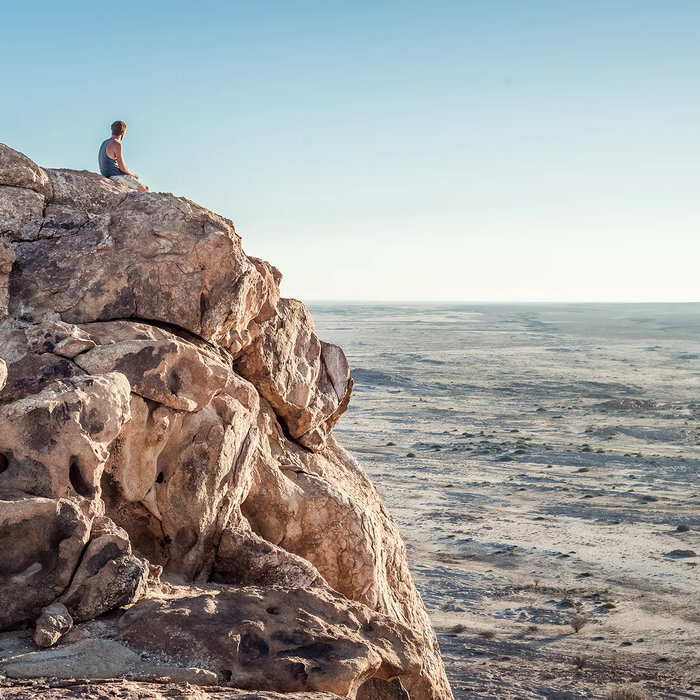
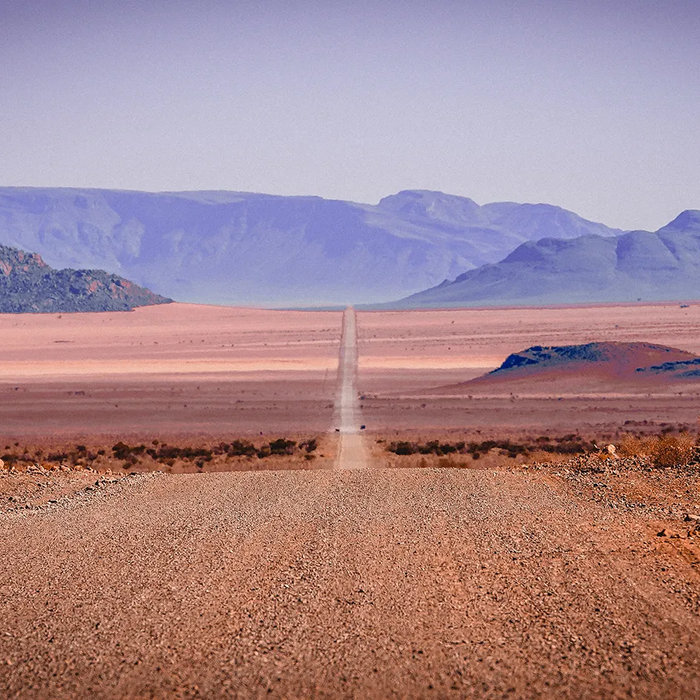
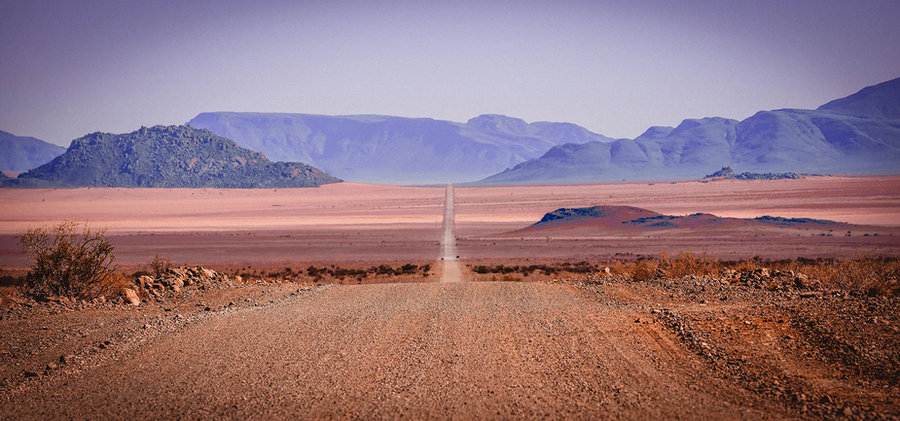
But Namibia is far more than safari and desert. It is the silence of sunrise over the red dunes. The feeling of standing under an endless starry sky. The long road through the wilderness, when ahead of you there is nothing but horizon. And that special feeling that for a moment you have found yourself in a place that belongs more to nature than to humans. Here time seems to flow more slowly. Space seems endless. And the world – somehow bigger.
Get ready for a journey to one of the last truly wild lands on the planet.
You could spend a lifetime exploring Namibia. Here we have gathered the most important moments of the 11-day safari – a captivating journey of discovery that includes Sossusvlei in Namib-Naukluft Park, the Skeleton Coast, Damaraland and Etosha National Park.
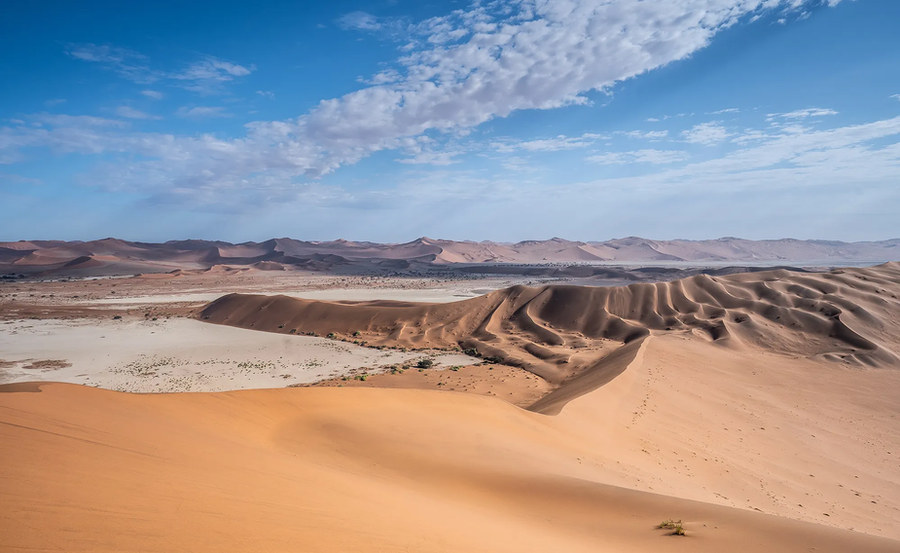
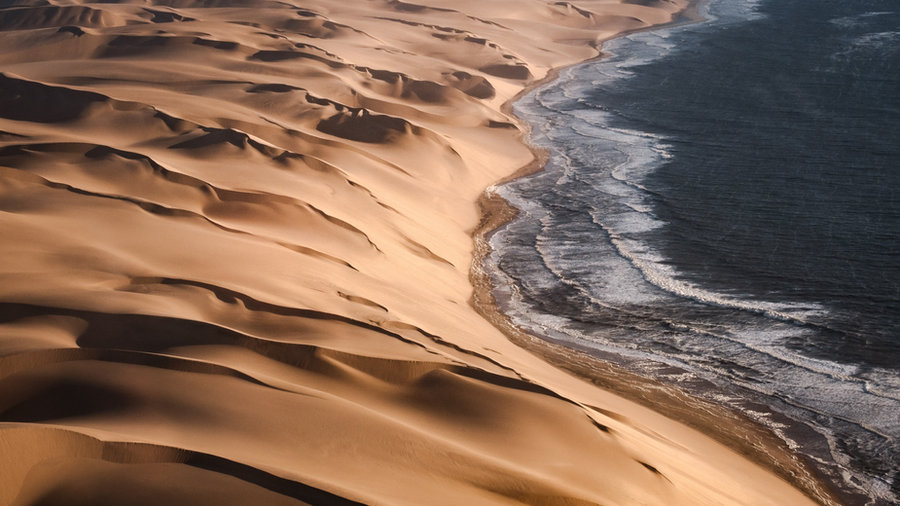
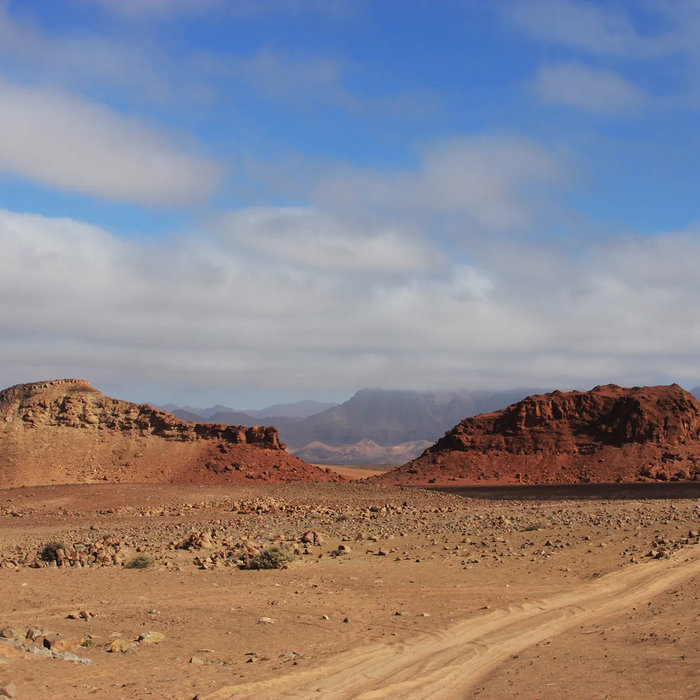
The Namib Desert covers the entire coastal strip of Namibia, over 1,500 km long, and extends up to 200 km inland. It is the oldest desert on the planet and is distinguished by an astonishing variety of landscapes and habitats,
including the Great Sand Sea of Sossusvlei and the surreal Skeleton Coast north of Swakopmund.
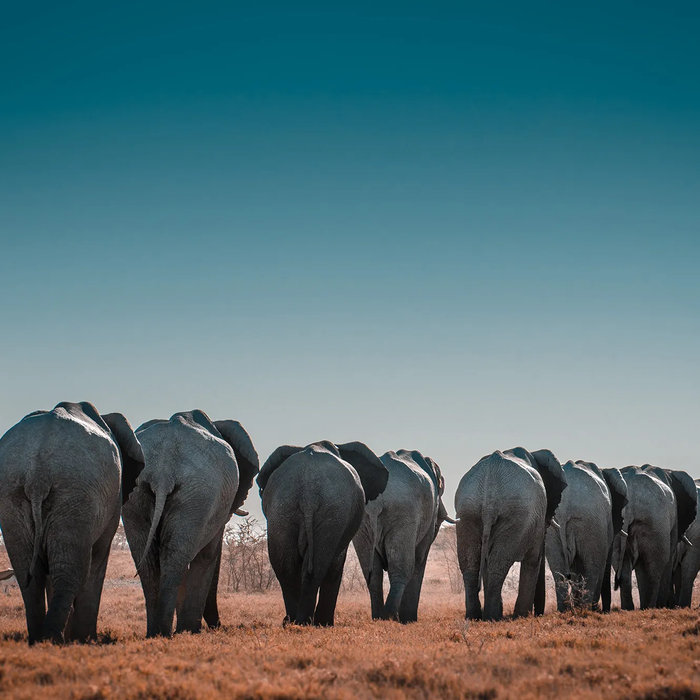
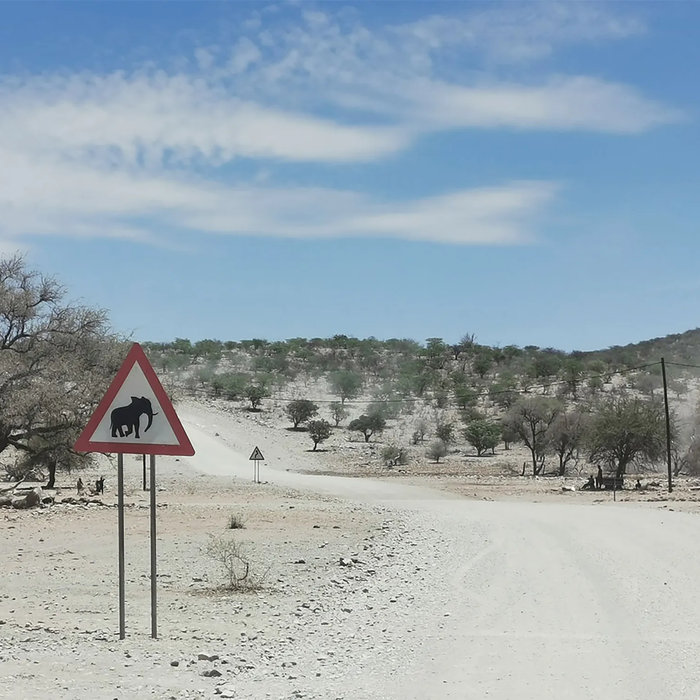
The picturesque rocky hills and sandy riverbeds of Damaraland form a vast undulating landscape that shelters a variety of desert-adapted wildlife, including elephants, rhinos, lions and
some quite hardy plains animals.
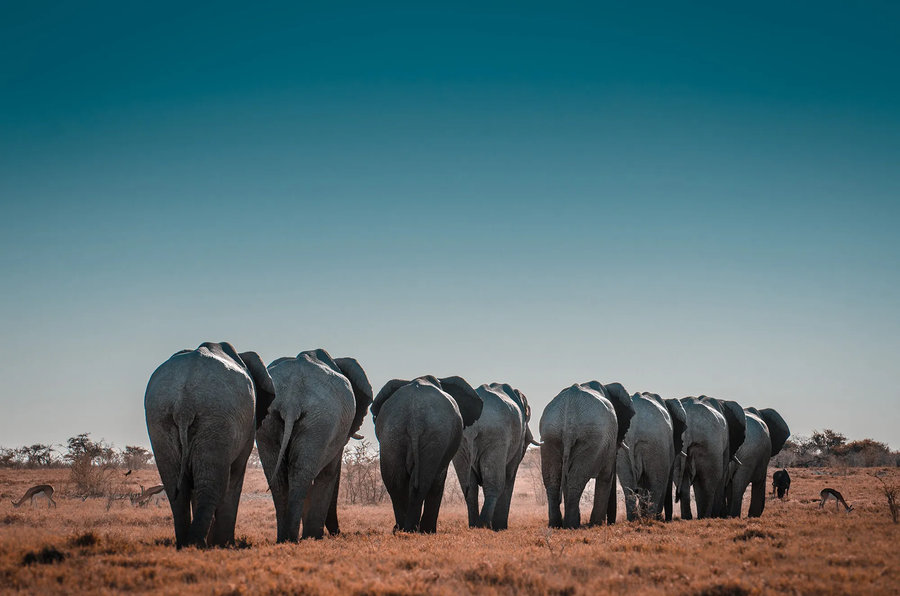
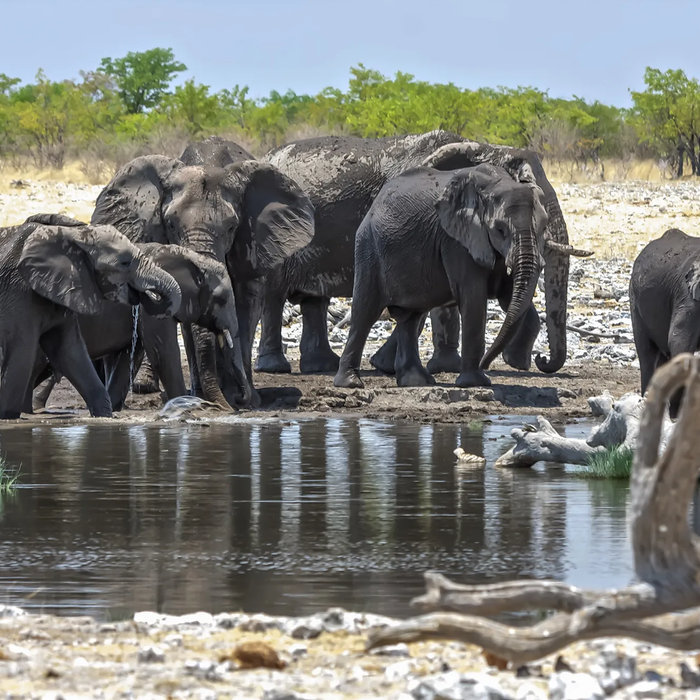
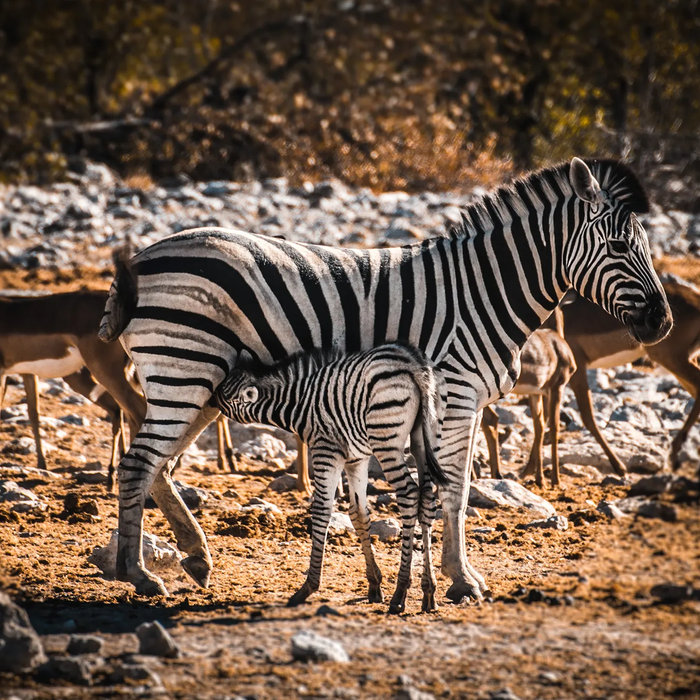
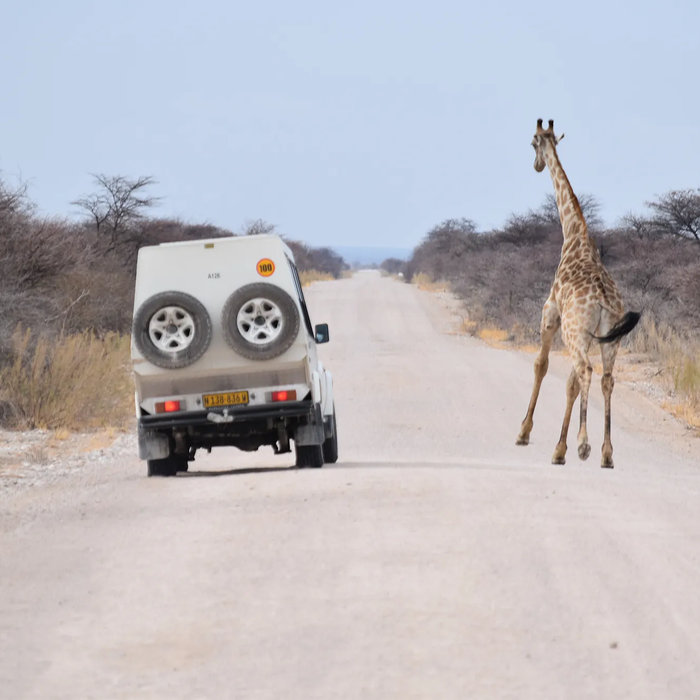
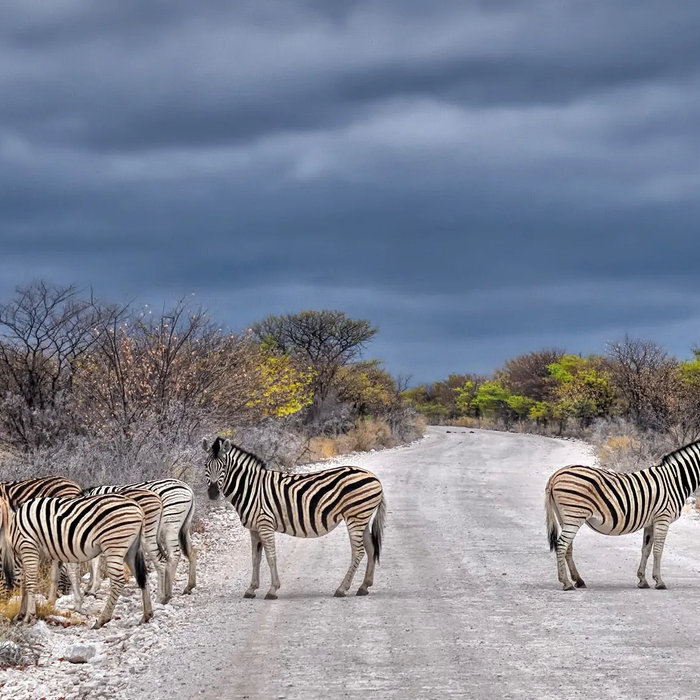
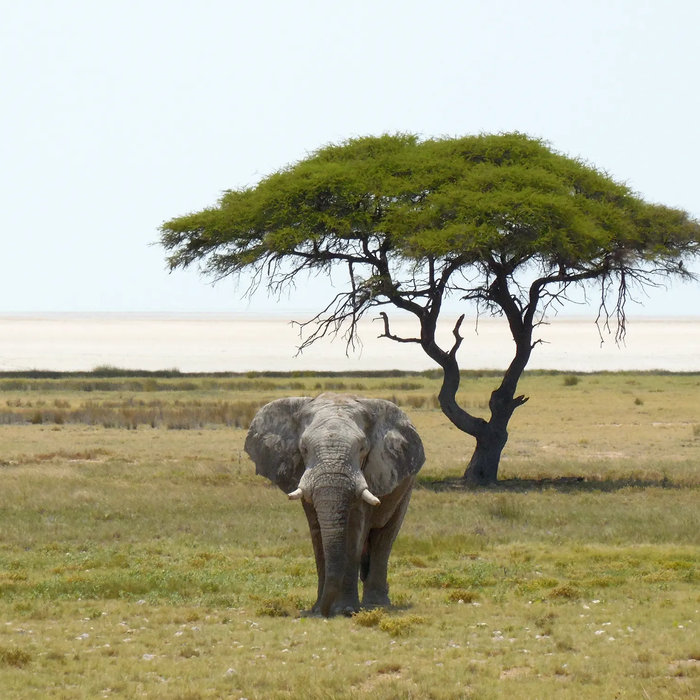
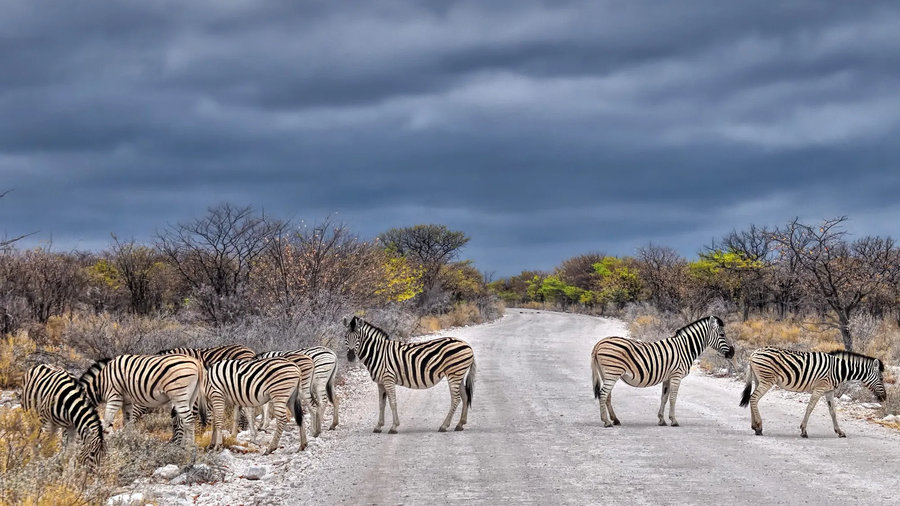
The plains game in Etosha National Park comes to drink in the middle of the day, when predators are most lethargic, so it is not unusual to get a collage of several different species in the same frame. Lions, elephants and several
endemic species of antelope and birds – including 46 birds of prey – add to the thrilling game viewing.
Which sights will we visit?
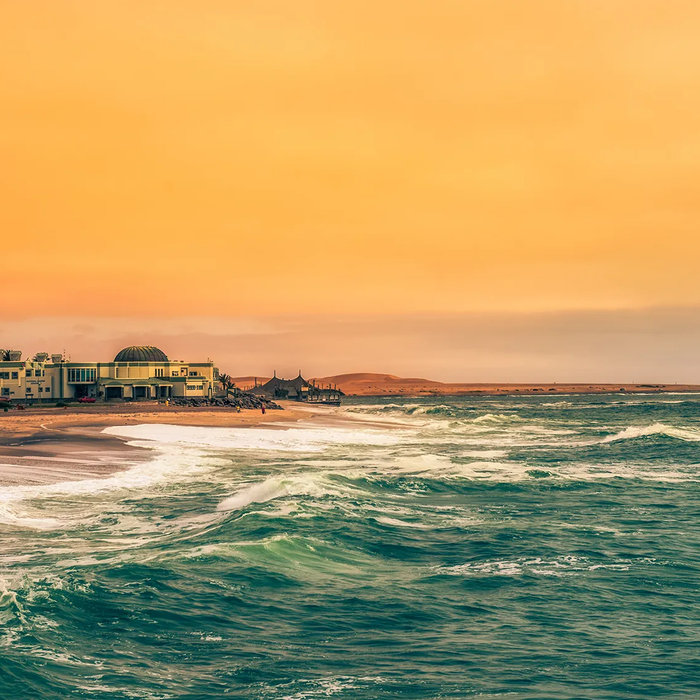
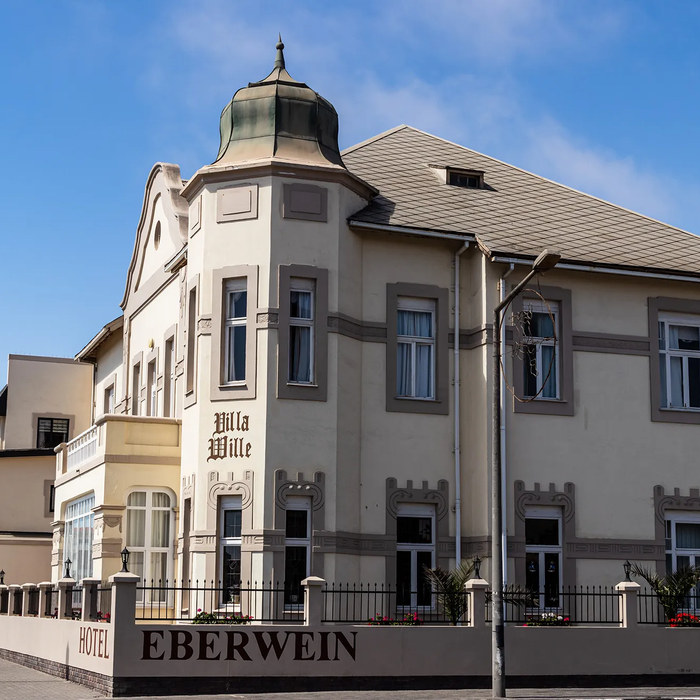
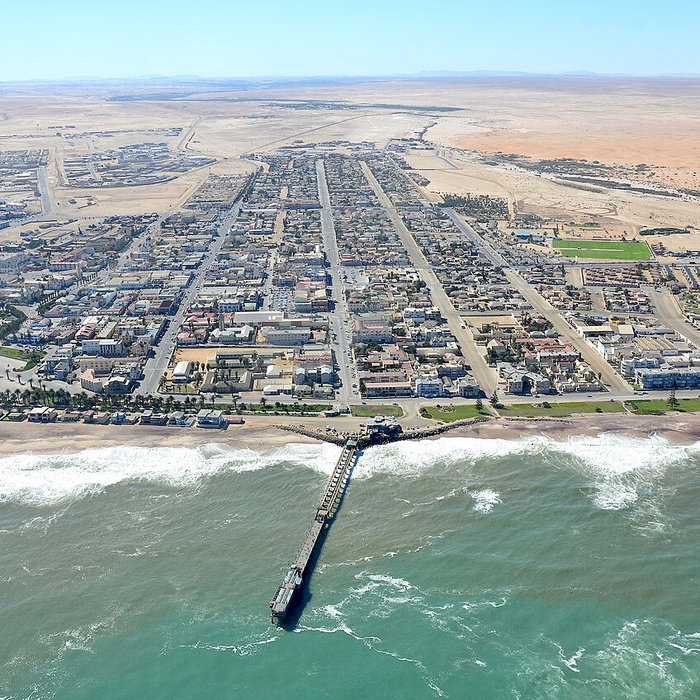
Swakopmund - Namibia's largest coastal town
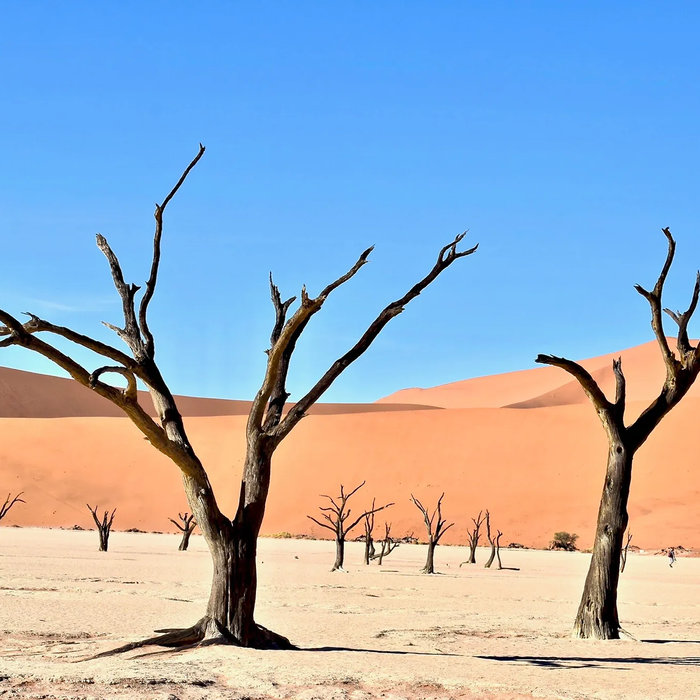
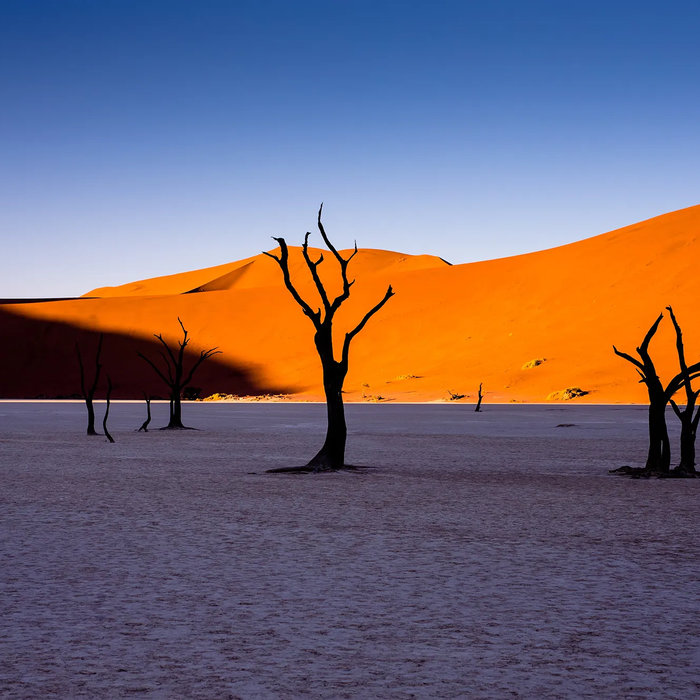
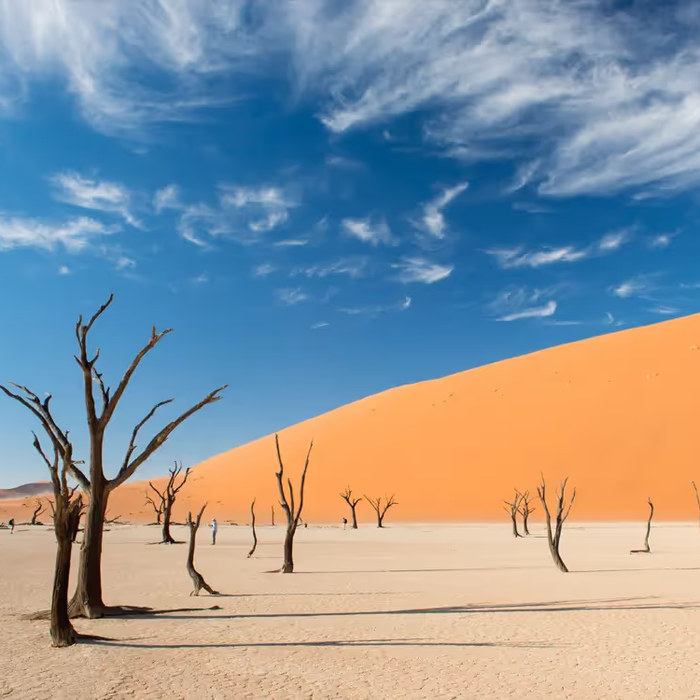
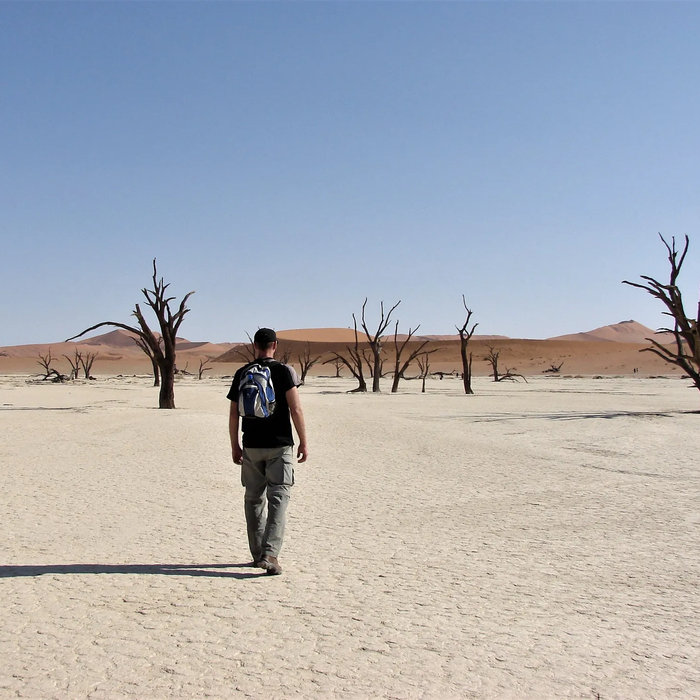
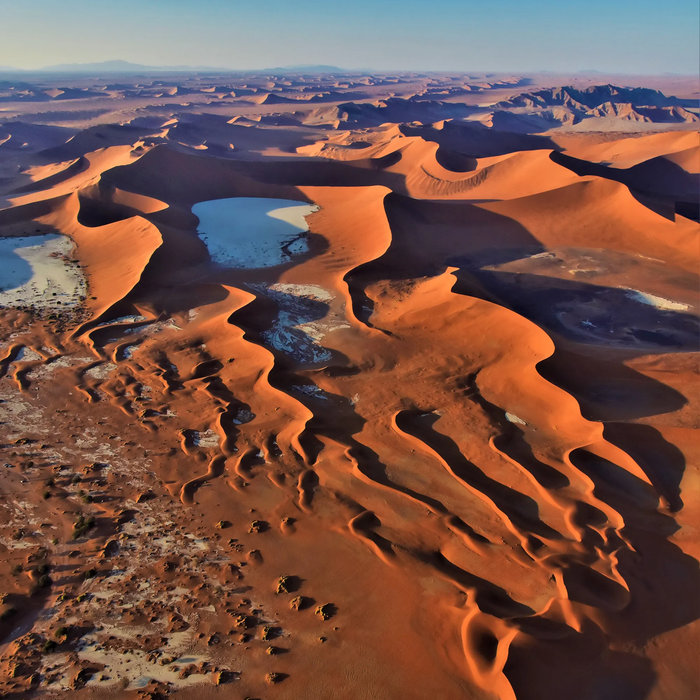
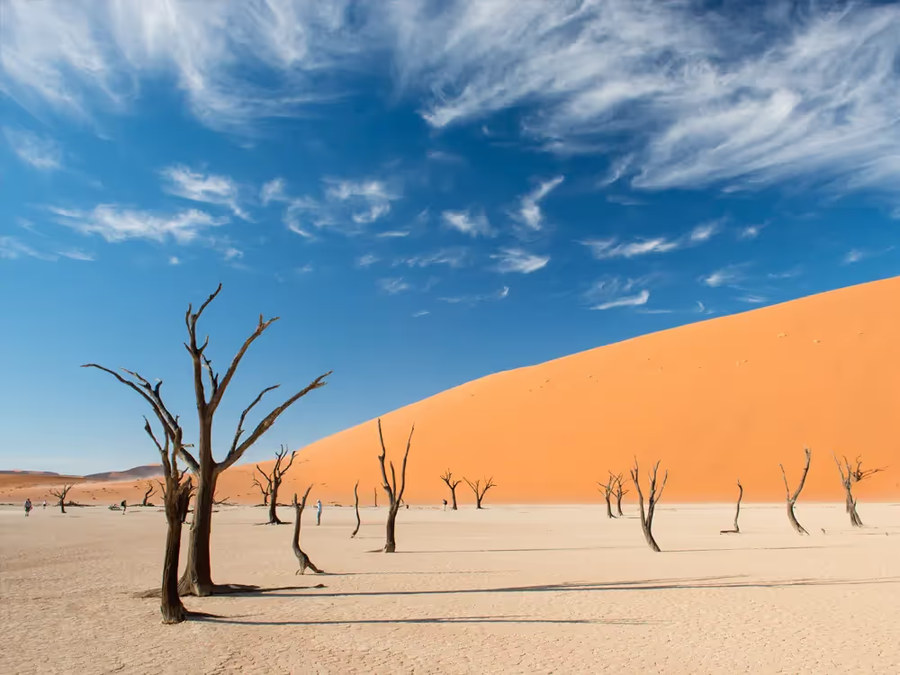
Sossusvlei - home to the vast salt and clay pans that have become a symbol of Namibia
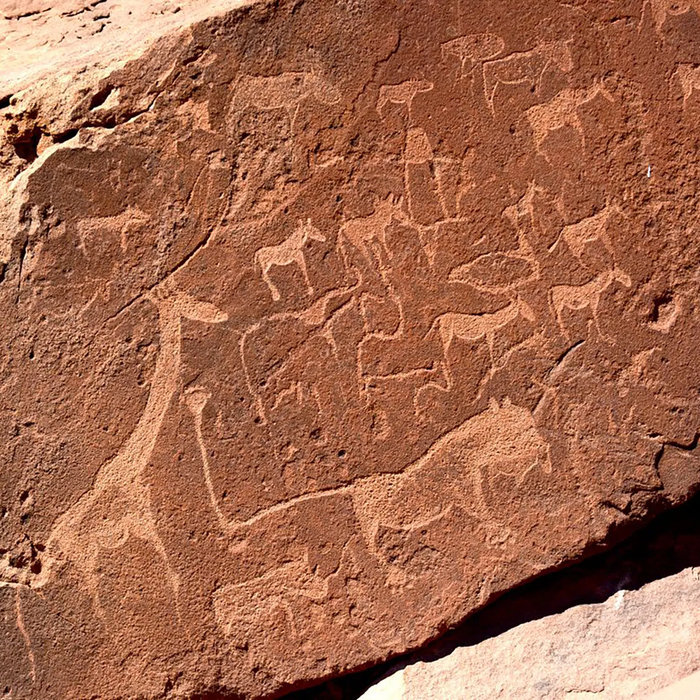
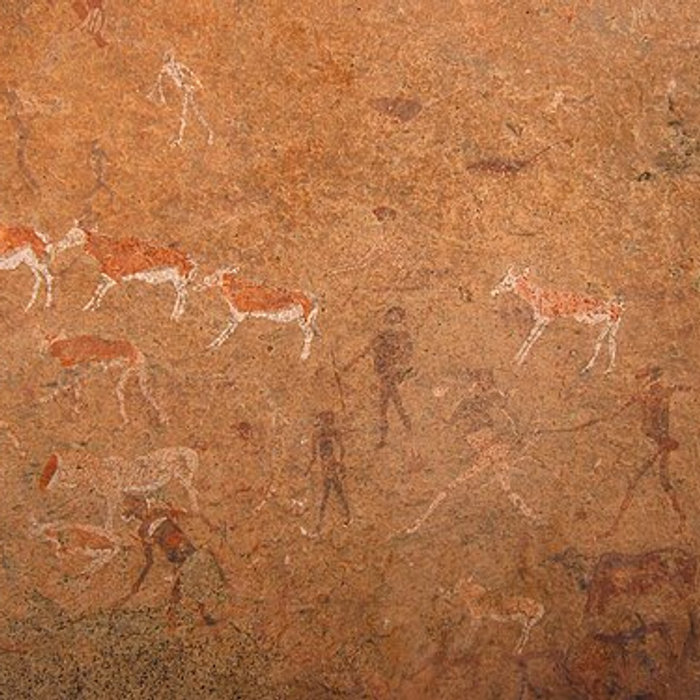
The rock paintings at Twyfelfontein, dating back more than 6,000 years
Etosha National Park - one of the best safari regions in Africa
Welcome to Namibia – where the desert tells stories and the horizon has no end.
Itinerary
DAY 1
Welcome to Windhoek
We arrive at the airport, where our guides Frank and Johan are waiting for us. From there we set off for the capital Windhoek, where we will check in at The Weinberg hotel.
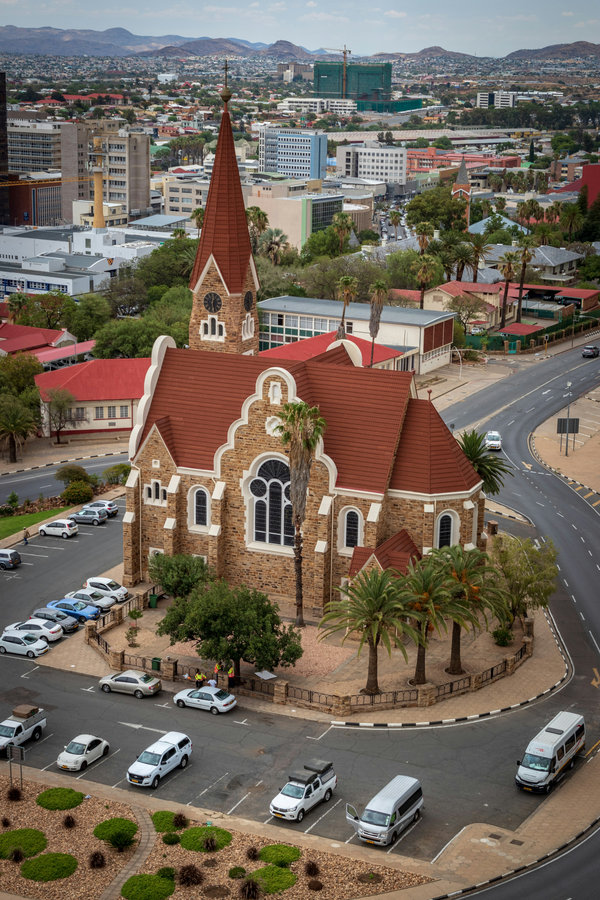
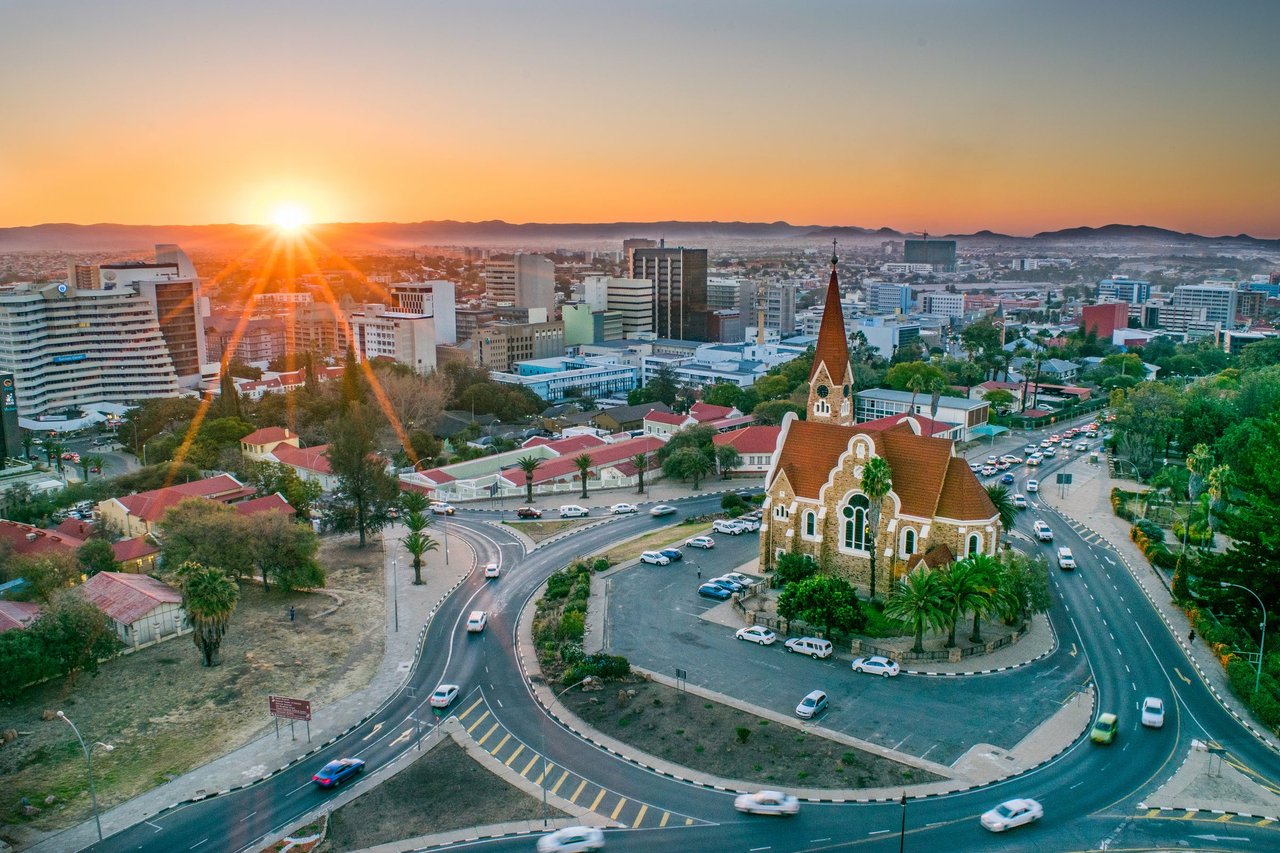
Set among the low-vegetation slopes of the Auas Mountains and the endless expanses of the Khomas Highland plateau, Windhoek stretches along a long valley fed by ancient thermal springs in the central highlands of the country.
The capital of Namibia is a lively and cosmopolitan city and in most cases the starting point or finish of a safari in Namibia. Windhoek impresses with many interesting historic buildings, museums, galleries and shops for local crafts. The city offers a good choice of restaurants, modern shops and all necessary services, making it an excellent starting point for your adventure in Namibia.
Overnight: The Weinberg, Windhoek (courtyard-view room)
Meals: breakfast
DAY 2
Sossusvlei
Today we travel from Windhoek to Sesriem. We leave the city to the south toward Rehoboth – home of the Baster community, from where there are two options: the exceptionally beautiful and very steep Spreetshoogte Pass, from whose top an endless view of the desert opens, or the more direct road via Bullsport with fewer bends. We make the choice together with the guides.
We check in at Desert Hills Lodge – the lodge is perched on a natural rock terrace overlooking the desert and the sunset over the Namib, with 18 chalets, a wine cellar and a pool.
We leave the hotel and head for Namibia's most iconic landscape – imposing dunes in rusty-red shades, dazzling white salt flats and an endless blue sky. This is the oldest desert on the planet – a place where star-shaped dunes with up to five arms rise to 300 metres in height and are among the tallest in the world. Between them stretch vast clay pans – witnesses of the time when the Tsauchab River ended its eternal quest to reach the ocean more than 60,000 years ago.
In this harsh and waterless land, vegetation and birds are the most visible forms of life. They support a surprisingly diverse, if small, world of mammals, reptiles and insects. In the absence of coastal fog, animals rarely stray from the riverbed and the surrounding plains – the only places where the desert offers sufficient conditions for life.
Approximate distance: 340 km · Approximate travel time: 6–7 hours
Overnight: Desert Hills Lodge, Sesriem (chalet)
Meals: full board
DAY 3
Sesriem Canyon
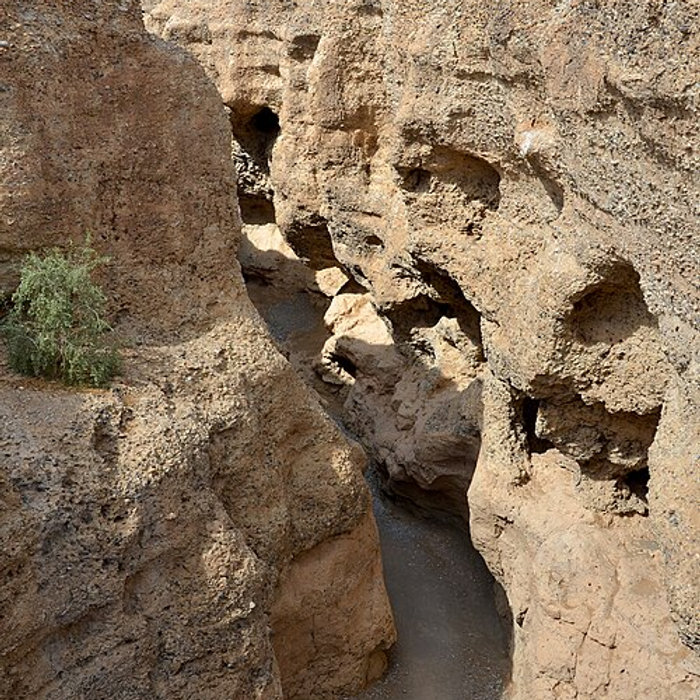
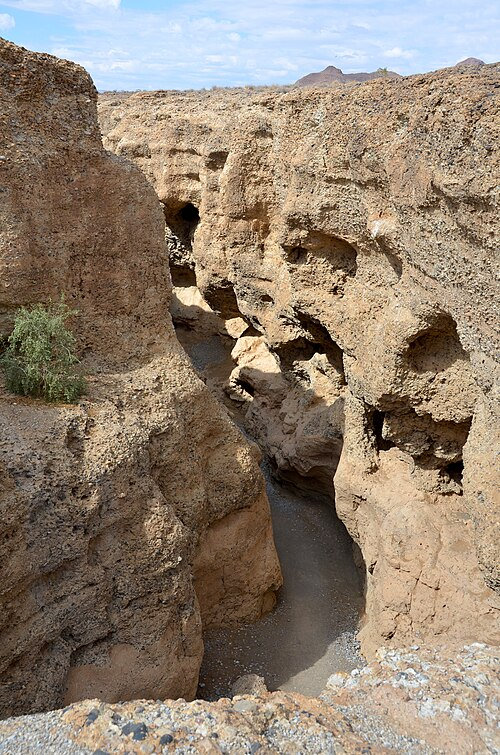
Today a full day awaits us in the Sossusvlei area. The guides will recommend an early start so that we reach the park gate at sunrise – it opens with the first rays and closes at sunset. The visit to Sesriem Canyon is optional – it is best left for later, when it is cooler, because the midday heat is strong and is best spent in the shade. Sesriem Canyon is one of the most impressive natural formations in the Sossusvlei area. For millions of years the waters of the Tsauchab River have carved a deep stone gorge in the layers of sandstone and limestone, creating narrow passages, sheer walls and natural rock galleries.
In places the canyon descends more than 30 metres deep, and in its narrowest sections sunlight barely reaches the bottom. In the shadows of the rocks hide small natural pools that preserve precious moisture and are a vital source of water in the harsh desert environment.
The name Sesriem comes from the early settlers, who used six leather straps tied together to reach the water at the bottom of the canyon. Today Sesriem is not just a geological sight but one of the places that best reveal the power of nature and the eternal battle between water and desert.
Overnight: Desert Hills Lodge, Sesriem (chalet)
Meals: full board
DAY 4
Travelling to Swakopmund
Today we will leave the hot desert behind and head for the cool coast. Our destination is Swakopmund – a charming resort town on the shore of the Atlantic Ocean.
An interesting journey awaits us, taking us from mountain and dune landscapes to open plains, with plenty of opportunities for stops along the way.
There are two route options to Swakopmund, and the choice depends on our preferences. We can discuss the options with Frank and Johan.
Option 1: Walvis Bay
The route takes us north toward Solitaire. We continue north until the road gradually turns west and brings us closer to the ocean coast.
At Walvis Bay we will head north along the coastal road to Swakopmund.
Option 2: Welwitschia Plains & Moon Landscape
The alternative route passes through Ganab, from where we can reach the Welwitschia Plains and the impressive Moon Landscape.
This route requires a permit to visit the park, which our guide can purchase in advance in Sesriem. On the way we can stop at Ganab – a camping and picnic spot – or at the Hotsas waterhole, where, if we are lucky, we can watch wild animals adapted to the harsh desert conditions quench their thirst. The route then continues to Swakopmund.
Approximate distance: 350 km
Approximate travel time: 6–7 hours (depending on stops along the route)*
Overnight: Strand Hotel Swakopmund (Luxury Room)
Meals: breakfast
DAY 5
A free day in Swakopmund
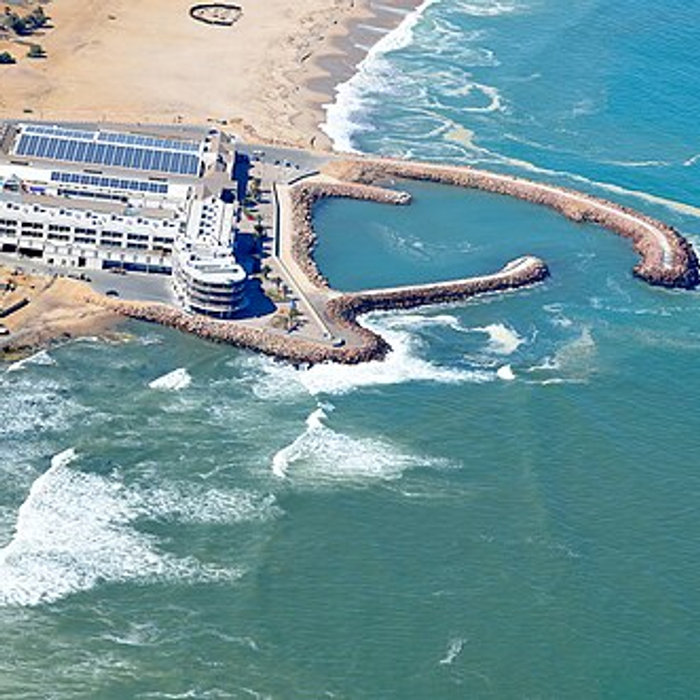
Nestled between the ancient Namib Desert and the harsh but generous waters of the Atlantic Ocean, Swakopmund is a lively coastal town that offers an impressive variety of experiences for adventure lovers. Located roughly midway between two of Namibia's greatest attractions – Sossusvlei and Etosha National Park –
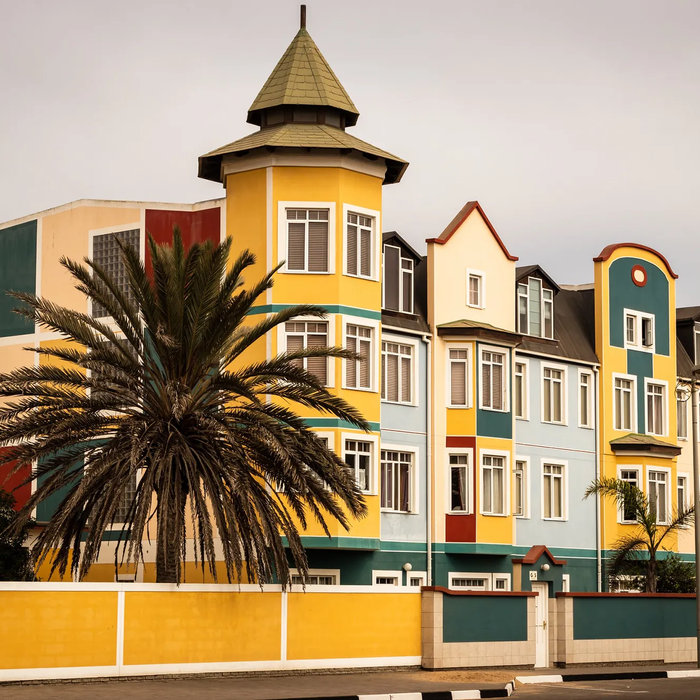
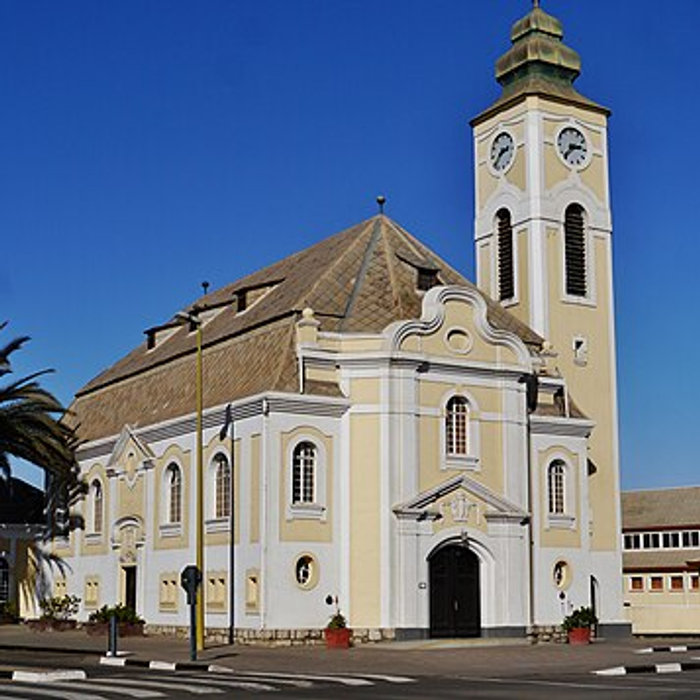
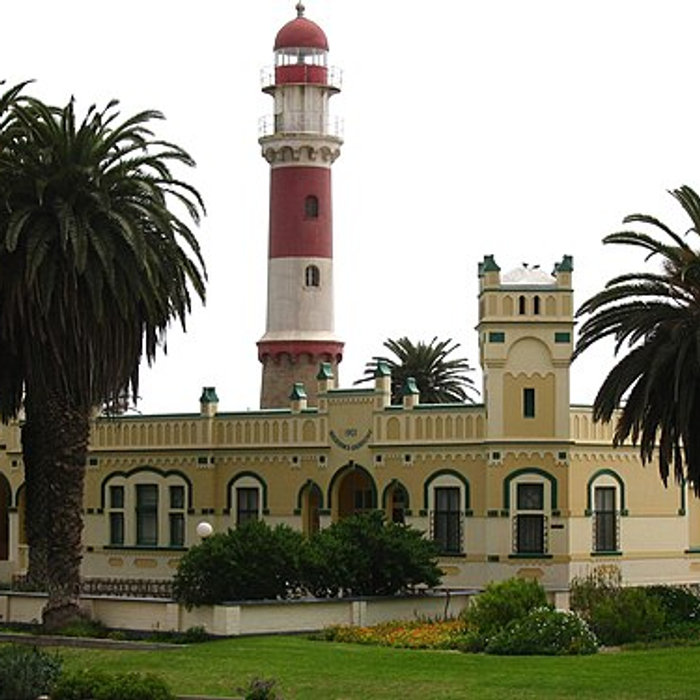
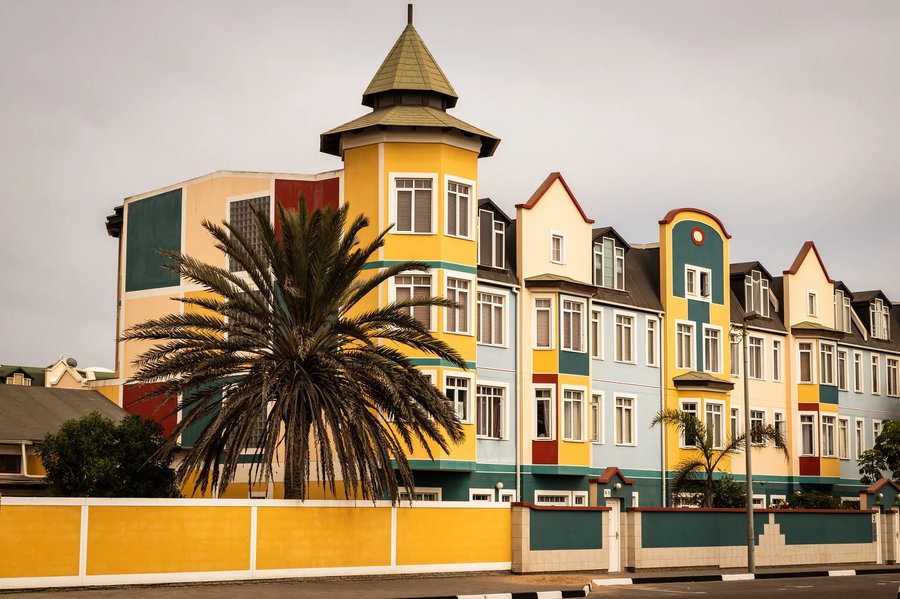
Swakopmund is the ideal place to rest during the long journey between them. There is something extraordinary about an extraordinary place. We will see Bavarian church spires rising between the palms, and the coastal landscape marked by a lighthouse built as far back as 1902. We will feel the spirit of the German colonial heritage everywhere – in the architecture, the historic buildings, the traditional German-style restaurants and the cosy cafés serving classic German pastries.
We will stroll through local restaurants and bars, a museum and a small aquarium, which give the town a lively atmosphere and make it a favourite place for tourists and locals alike. For those who prefer more adventure, Swakopmund offers a rich choice of unforgettable experiences – from a flight over the desert and the ocean to sandboarding, ATV tours, a dolphin cruise and sea kayaking.
Overnight: Strand Hotel Swakopmund (Luxury Room)
Meals: breakfast
DAY 6
Damaraland
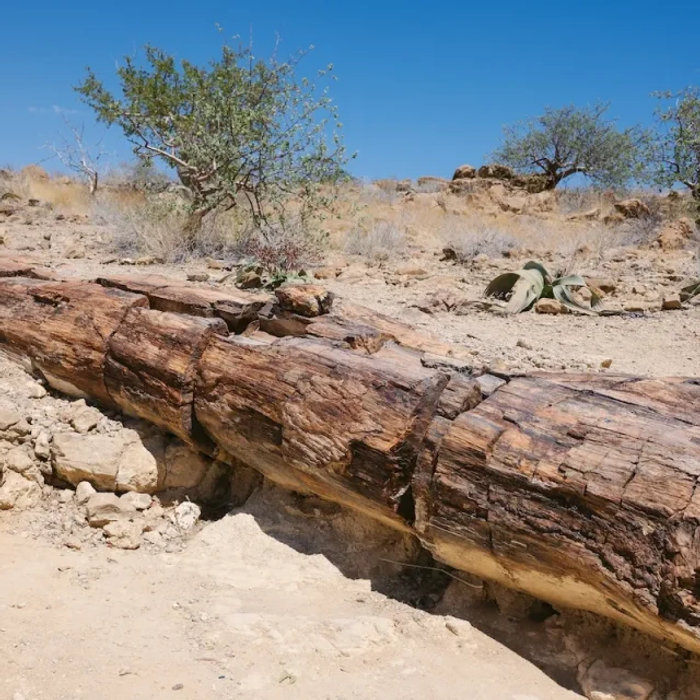
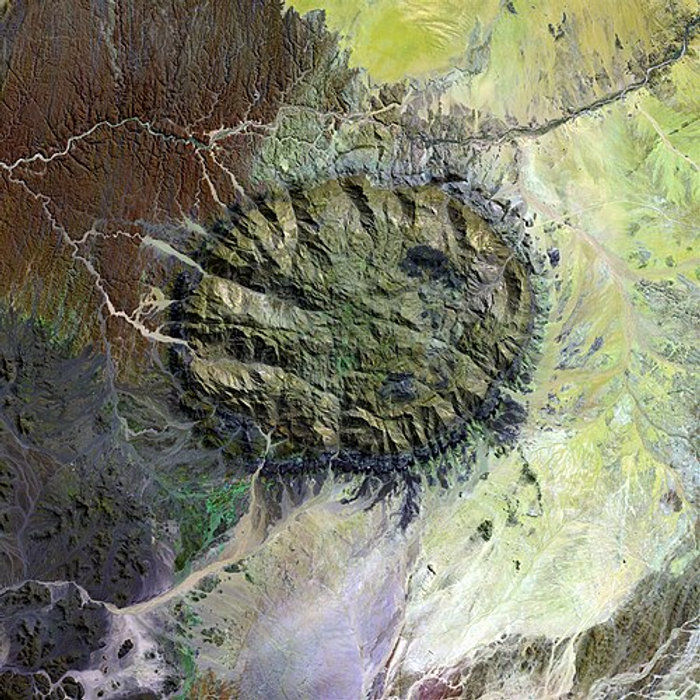
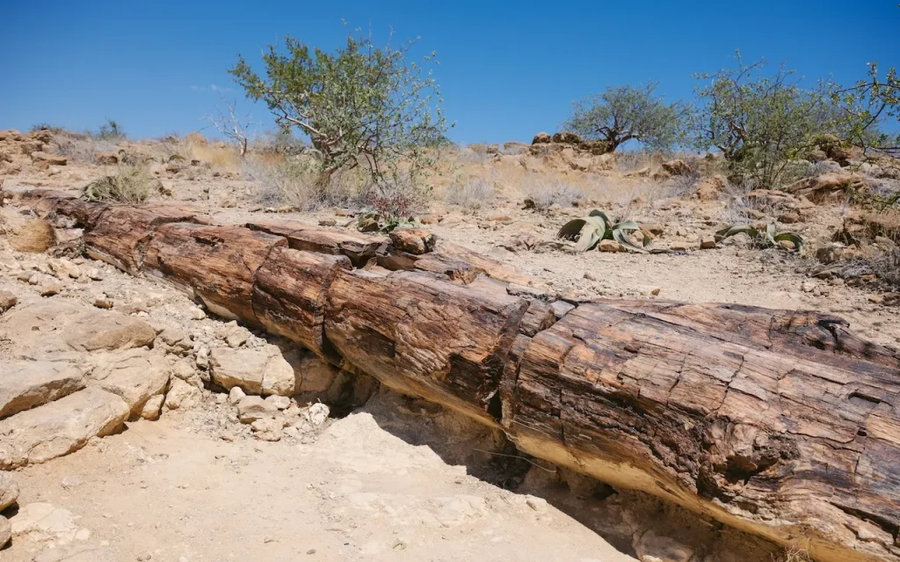
Damaraland impresses not only with its nature but also with its rich geological and historical heritage. Huge isolated granite massifs, formed millions of years ago, rise sheer and jagged above the barren plains of the interior of the Namib Desert. Among the most impressive places is Brandberg – the highest mountain massif in Namibia, known not only for its imposing size but also for its ancient rock paintings, including the famous "White Lady of Brandberg". On the journey we will also see Burnt Mountain, Organ Pipes, the Doros and Messum craters, as well as the Petrified Forest – the remains of trees dating back approximately 280 million years. Our route continues north toward Henties Bay, where on the way we will stop to see the remains of old shipwrecks and the unusual lichen fields characteristic of the coastal zone.
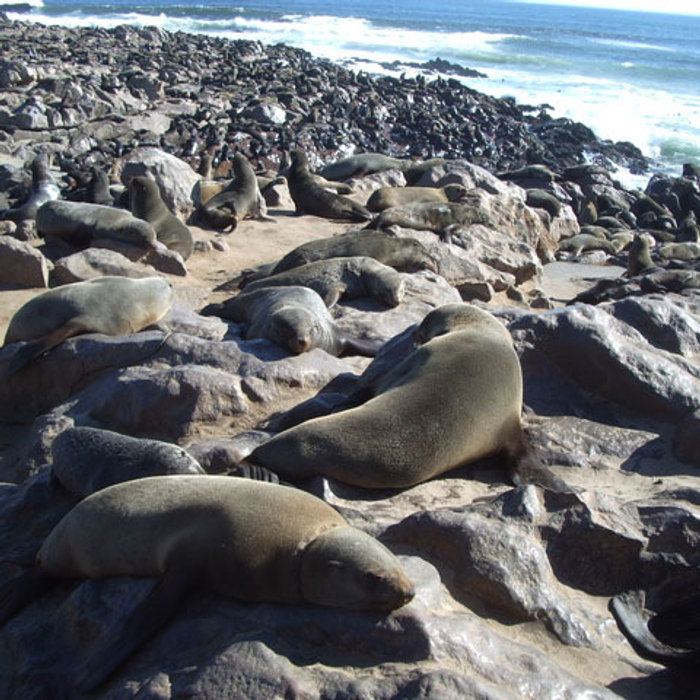
There is also the possibility of visiting the Cape fur seal colony at Cape Cross. The smell around the colony can be quite strong, but one quickly gets used to it. Cape Cross is a protected nature reserve and one of the places with the largest colonies of Cape fur seals in the world. According to the reserve, approximately 210,000 seals live here, and a special environmental code has been introduced to protect these impressive marine mammals.
There are two route options to Damaraland. The first is via Uis (410 km) – a small town where there was once a tin mine. There we have lunch, refuel and continue north toward the Twyfelfontein area. The second is along the Skeleton Coast (450 km) – a beautiful but longer day. From Cape Cross the route continues north on a salt road through Skeleton Coast Park, passes an abandoned oil platform and the former Toscanini diamond mine and descends through a mountain pass into the Huab Valley. On this route there are no petrol stations, shops or other services until the Twyfelfontein area.
Among the main places in the area are the rock engravings at Twyfelfontein – Namibia's first UNESCO site, Burnt Mountain, Organ Pipes and the Damara Living Museum. If desired, the guide will drive along the dry riverbed, where there is a chance to see desert elephants.
Approximate distance: 410–450 km (depending on the route) · Approximate travel time: 6–7 hours
Tip: wear closed shoes and watch where you step – the area is rich in scorpions.
Overnight: Doro Nawas Camp, Damaraland (tent)
Meals: half board
DAY 7
Travelling to Etosha National Park
Today we continue our journey to Etosha National Park, where unforgettable encounters with wildlife await us. Our route will follow dirt roads north, and then east to Khorixas. From there we continue on tarmac to Outjo, and then head north to Etosha Oberland Lodge.
If we wish, Frank and Johan can make a stop at the Petrified Forest before Khorixas.
The Petrified Forest is a unique site of huge tree trunks that over millions of years turned to stone through a natural geological process. Today they have become impressive fossils. At the site you can see at least two huge trunks about 45 metres long, and hundreds more fragments and remains of the ancient trees lie in the surrounding area.
Stop in Outjo - an excellent place for a break in the middle of today's route.
Etosha Corner is a kind of local hub that combines a farm shop, restaurant, plant nursery, wine cellar, souvenir shop and many other interesting offerings. It is a great place for lunch or a short break with something to eat, and visiting it supports the local community.
Approximate distance: 325 km · Approximate travel time: 4–5 hours (may be longer depending on stops). Etosha Oberland Lodge is 10 km from the park's southern entrance – Anderson Gate.
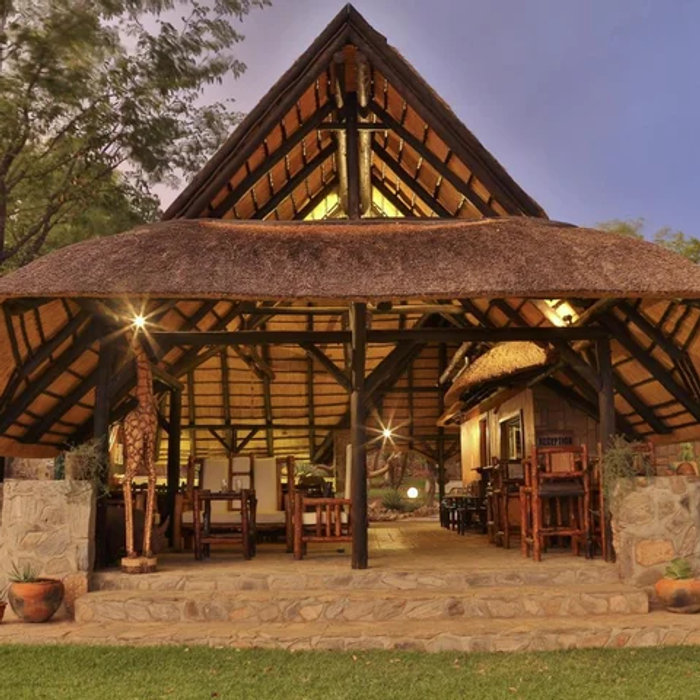
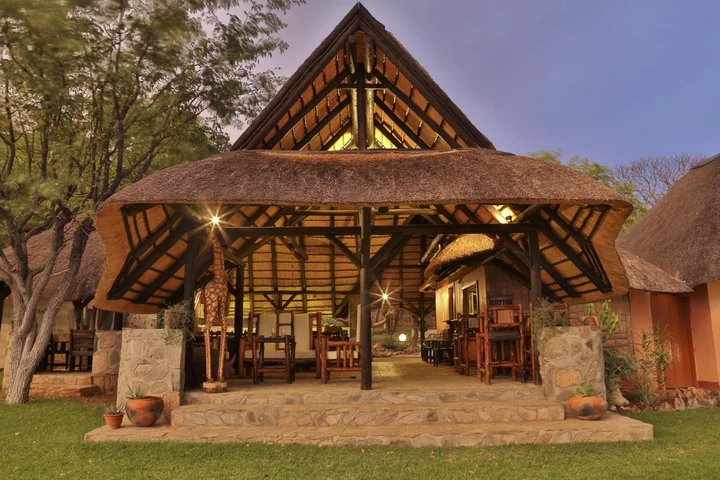
Overnight: Etosha Oberland Lodge, Etosha South (chalet)
Meals: full board
DAY 8
Etosha
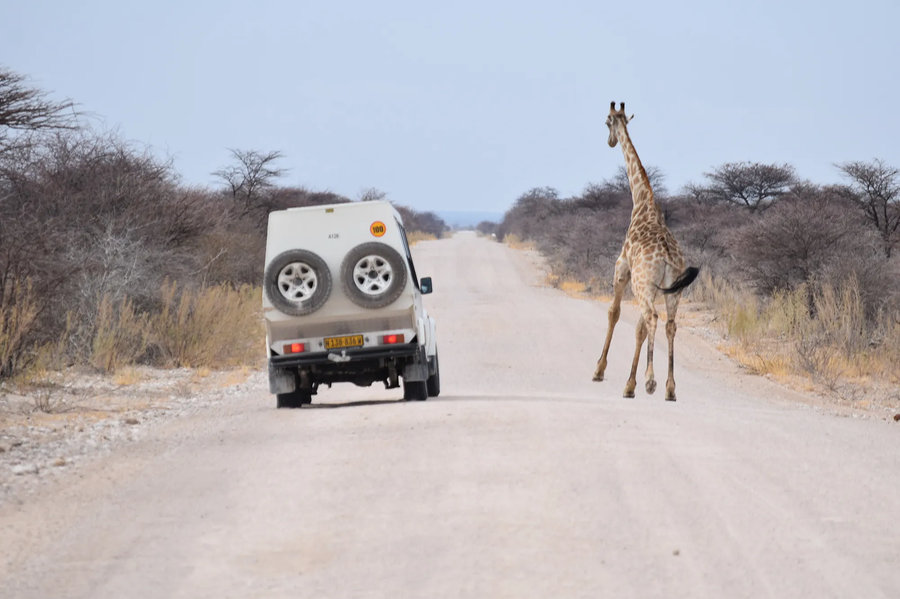
Today we will spend a full day exploring Etosha National Park with Frank and Johan. We have the chance to immerse ourselves in Namibia's wildlife and observe the animals in their natural environment. If we prefer a calmer day, we can take advantage of the lodge's amenities and choose one of the additional activities offered on site.
Located immediately south of the borders of Etosha National Park, in north-western Namibia, the Etosha South area covers the southern parts of this wild and impressive corner of the country. Here are a number of world-famous private reserves that offer excellent conditions for wildlife viewing.
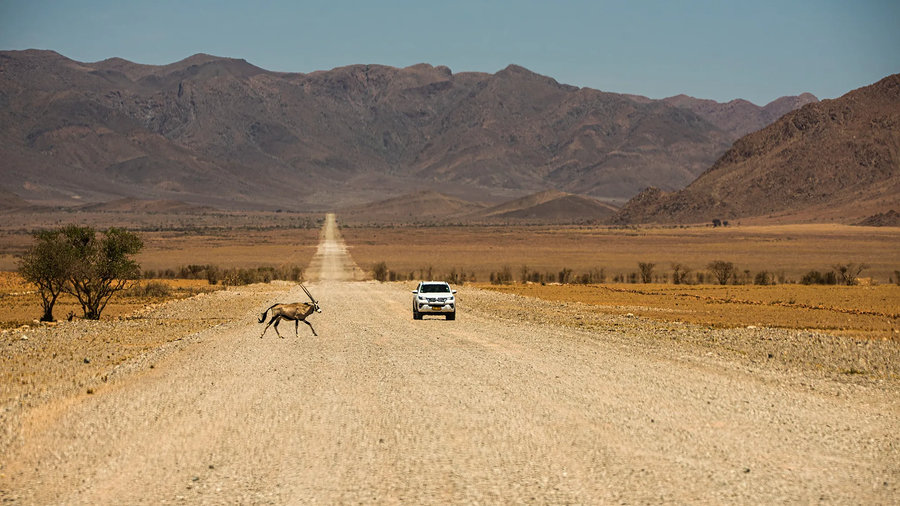
During the safari we may encounter an impressive variety of animals – lions, giraffes, elephants, white and black rhinos, as well as many representatives of the plains fauna.
One of the best ways to experience the area is an open 4x4 safari with an experienced guide. We can choose a half-day or full-day tour, and on the full-day safari we will also be able to enjoy a picnic in the wild, accompanied by a glass of wine.
Good viewing spots in the southern part of the park: Ombika, Gemsbokvlakte, Olifantsbad, Nebrownii, Okondeka and the Okaukuejo waterhole.
Overnight: Etosha Oberland Lodge, Etosha South (chalet)
Meals: full board
DAY 9
Waterberg
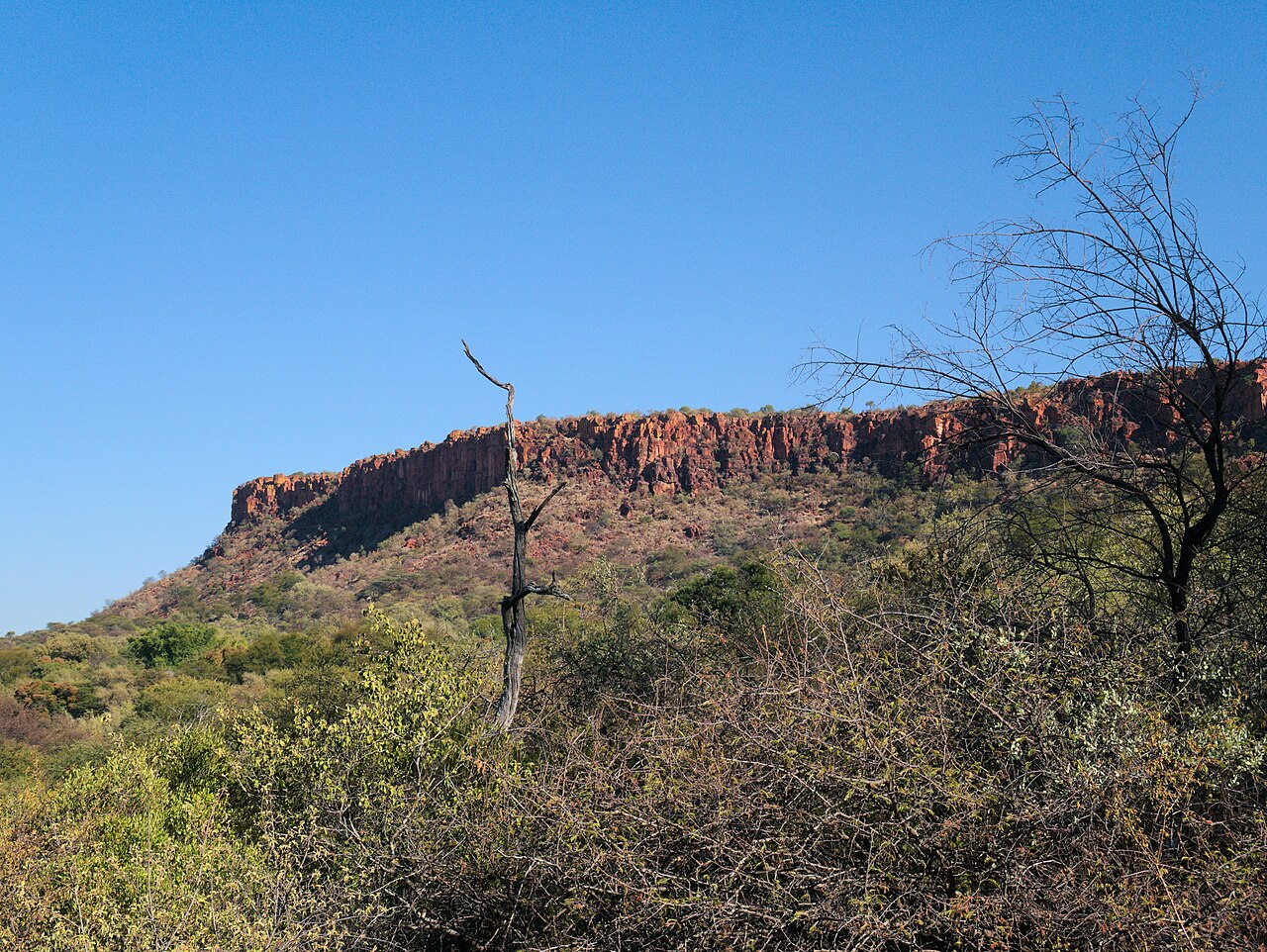
Today our road continues to Waterberg – a true wildlife oasis on the way to Etosha National Park. The plateau rises 200 metres above the surrounding plains and offers a landscape quite different from anything we have seen so far – open grassy expanses and dense acacia savannas, fed by natural springs hidden at the foot of the cliffs.
Here is the Cheetah Conservation Fund – a collection of private reserves devoted to the conservation of cheetahs, and near them the AfriCat foundation at Okonjima Lodge, where endangered predators are rehabilitated and returned to the wild. In Waterberg Plateau Park rare species such as the white rhino, buffalo, sable and roan antelope have been reintroduced, and among the local residents are giraffes, kudus, leopards, hyenas and cheetahs.
We check in at Otjiwa Mountain Lodge, located on the farm of the same name – the oldest land set aside for game in Namibia. If we wish, we can also stop at a Ovaherero community village to experience their rich culture, customs and traditional dress.
Approximate distance: 215 km · Approximate travel time: about 3 hours. Otjiwa Mountain Lodge is 45 km south of Otjiwarongo. The evening includes a sundowner drive in the reserve.
The last day of our Namibian adventure. We set off along a smooth tarmac road to the south, and on the way stop in Okahandja – home of the largest market for carved wooden items in Namibia, where we can look for a souvenir to take home.
We continue south to the capital Windhoek and then to Hosea Kutako airport, where our journey home begins. Here we say goodbye to Frank and Johan, who over the past days made sure every moment of the trip was safe and unforgettable.
Namibia has left us with a feeling of endless horizons, a silence we rarely encounter, and memories we will carry long after we return. Until the next adventure!
PRACTICAL INFORMATION
Your guide
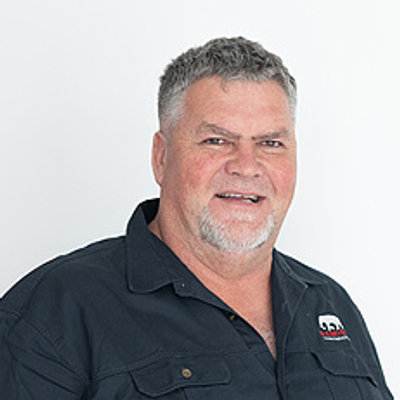
Frank Austin
Frank Austin is a highly respected Namibian safari guide with many years of experience organising and leading expeditions to the most remote and rugged corners of Southern Africa.
Besides charm and inexhaustible knowledge, Frank impresses with everything we would want from a true safari guide – a friendly and hospitable companion with in-depth knowledge of the people, history, geography, animals and birds of Namibia.
And when the adventure serves us an unexpected technical surprise, Frank is the person we can rely on – capable of repairing even a broken differential with nothing but a teaspoon and a pot of hot, strong coffee.
It is precisely this combination of knowledge, experience, sense of humour and practicality that makes Frank much more than a guide – a true companion on our Namibian adventure.
 Prime HolidaysLuxury Travel Services